 Technology28 Sept 2026
AI Challenges Traditional Mathematics by Claiming Navier-Stokes Solution
OpenAI's claim of solving a major math problem using AI raises concerns about creativity and understanding in mathematics.
AI Breakthrough or Creative Threat?
OpenAI has stirred significant debate in the mathematics community following its announcement that it has supposedly solved the Navier-Stokes existence and smoothness problem. This longstanding mathematical enigma is crucial to understanding fluid dynamics and has perplexed mathematicians for decades. While OpenAI's achievement showcases the evolving capabilities of artificial intelligence, it also raises essential questions about the implications for the creative processes fundamental to mathematical discovery.
Background on the Navier-Stokes Problem
The Navier-Stokes equations, formulated by 19th-century scientists, model the flow of viscous fluids and form a cornerstone of fluid dynamics. Engineers utilize these equations for applications such as designing airplane wings, but mathematicians are intrigued by the equations themselves as a puzzle rather than their practical uses.
“Mathematicians’ main interest in the equations was certainly not engineering,” explains Jared Speck, a mathematician at Vanderbilt University. “They pursued answers to the problem because of the mathematical richness, the puzzle aspect of it.” This intellectual curiosity reflects a pattern common in mathematical work, which often mirrors artistic exploration.
The Artistic Nature of Mathematics
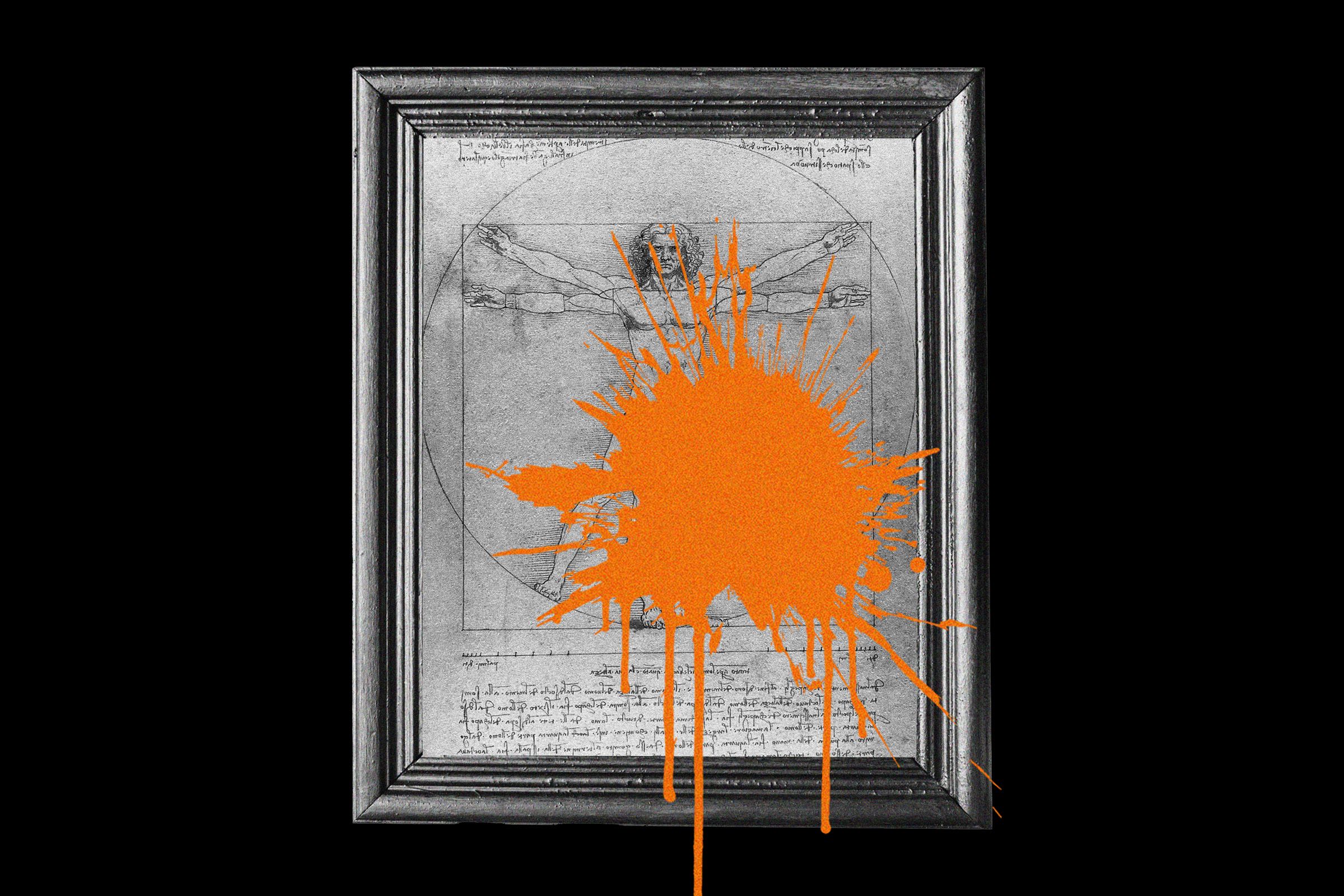
Historically, the field of mathematics has been considered an art form. In his seminal essay, A Mathematician’s Apology, G. H. Hardy likens mathematicians to artists, working with abstract structures rather than physical mediums. He championed the idea of pursuing mathematics for its own sake, arguing against practical applications. His assertion that “useless” mathematics can yield profound insights remains relevant today, especially in light of OpenAI's proof.
Despite its breakthrough, OpenAI’s solution to the Navier-Stokes problem is deemed "useless" in a practical context, igniting criticism regarding its implications for future mathematical inquiry. Many believe that the brute-force methodology employed by AI undermines understanding and meaningful exploration, threatening the very fabric of the mathematic community's cultural values.
Concerns from the Mathematical Community
Mathematicians are concerned that the reliance on AI to crack complex problems reduces opportunities for creative engagement and mentorship among emerging researchers. According to Juspreet Singh Sandhu, a mathematician at Colorado State University, mass-producing proofs via AI could “destroy fertile ground instead of breathing life into new ideas.”
A declaration signed by numerous Fields Medal winners emphasizes the critical need for understanding over mere answers. They warn that speed-driven solutions may lead to superficial comprehension, thus stifling the creativity that fuels significant mathematical advancements.
OpenAI's Response
In light of these concerns, OpenAI has established an advisory group of mathematicians to help navigate the relationship between AI and mathematics. The company's statement underscores its desire for a collaborative engagement with the mathematical community, aiming to ensure that AI contributes positively rather than detract from the discipline.
However, this gesture does not alleviate worries about the growing rift between human mathematicians and AI. Lorenzo Gavassino, a theoretical physicist, posits that while AI can handle tedious calculations, it risks depriving mathematicians of valuable insights that arise from grappling with challenging problems.
The Future of Mathematical Inquiry
The integration of AI in problem-solving calls for a reevaluation of the traditional educational framework in mathematics. The longstanding mentor-apprentice model has fostered a culture where knowledge is passed down through generations, encouraging deep comprehension and creative exploration.
“Now, AI seems to be capable of picking math’s lowest-hanging fruit, thereby threatening to scoop younger researchers and deprive students of training opportunities,” Speck warns. This shift could hinder the development of new mathematical concepts—just as the invention of imaginary numbers led to groundbreaking advancements in fields such as quantum mechanics.
Conclusion
The intersection of AI and mathematics presents both exciting opportunities and formidable challenges. OpenAI’s claim regarding the Navier-Stokes problem has ignited a crucial dialogue about the role of creativity and understanding in mathematical research. As the mathematical community continues to navigate this new frontier, it remains essential to preserve the artistic spirit of the discipline while responsibly incorporating technological advancements. Only time will reveal the long-term implications of AI in mathematics, but for now, the pursuit of understanding remains paramount.
Popular news
At least seven dead and 40 injured in a market strike in Taiz, Yemen, amid escalating tensions and conflicting reports on military activity.





Subscribe to
our news
Get the most important updates and top stories in your inbox.