 Technology15 Apr 2026
AI Revolutionizes Ocean Current Mapping with Unprecedented Precision
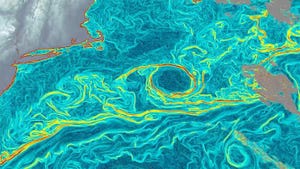
UC San Diego's GOFlow uses AI to map ocean currents, enhancing climate understanding and pollution tracking with unprecedented detail.
Advancements in Oceanography: Mapping Currents Like Never Before
Researchers at the University of California, San Diego, have unveiled an innovative AI-powered tool named GOFlow, which accurately maps ocean currents with extraordinary precision. By utilizing thermal imagery derived from weather satellites, the newly developed method signifies a groundbreaking step in oceanographic research and climate science.
Published in the journal Nature Geoscience, the study combines cutting-edge technology with data analysis, allowing for the tracking of fast and subtle changes in ocean currents. According to Luc Lenain, an oceanographer at UC San Diego's Scripps Institution of Oceanography and the study's primary author,
"We can now observe small, fast-changing ocean currents from space with much greater detail and frequency than before. These currents are important because they help control how heat, carbon, nutrients, and pollutants move through the ocean."
The Genesis of GOFlow
The idea for GOFlow emerged from Lenain’s observations while analyzing thermal satellite images of the North Atlantic, particularly the Gulf Stream. He recognized distinct thermal patterns correlated with the currents, which led him to conceptualize a new method for measuring these currents through AI technology.
The researchers created a neural network within GOFlow by initially training it on simulated ocean currents and subsequently applying it to actual satellite imagery. The AI tool tracks shifting surface temperatures, which reflect the movements of underlying ocean currents, helping to elucidate the relationship between temperature variations and the currents responsible for them.
Validating the Results
To ensure the reliability of GOFlow's mappings, the team compared the AI's output with data gathered from ships operating in the Gulf Stream area. They also validated their results against traditional satellite tracking methods that monitor height changes in the ocean's surface. The findings indicated that while GOFlow corroborated existing ship and satellite data, it also revealed a richer tapestry of ocean currents than previously captured by conventional methods.
Lenain emphasized, "These kinds of AI-driven approaches are not replacing physics. Instead, AI is helping us extract physical information that is already present in satellite observations, but has been difficult to recover with traditional methods until now."
Overcoming Challenges
Despite the impressive capabilities of GOFlow, the researchers acknowledged limitations, such as the interference caused by cloud cover, which can obstruct satellite observations of the ocean. Future work aims to integrate additional satellite data to mitigate these challenges and improve the tool's utility.
To promote transparency and further research, the computer code developed during this study will be made publicly accessible, allowing the broader scientific community to benefit from this advancement. Lenain views this tool as a critical step toward incorporating extensive remote-sensing datasets with machine learning applications in more practical scenarios.
Broader Implications for Earth Observation
The ability to utilize satellite images for detailed analyses of ocean currents exemplifies the importance of Earth observation in various sectors, including government, military, agriculture, and insurance. As NASA, the European Space Agency, and private aerospace firms continue to invest in AI technologies for data analysis, the potential for these tools to enhance our understanding of environmental dynamics expands significantly.
In summary, GOFlow stands at the forefront of oceanographic innovation, providing rapid and detailed insights that could significantly advance scientific understanding of climate interactions and pollution dynamics.
Popular news
A small plane crash while touring the Nazca Lines in Peru has resulted in 13 fatalities, including tourists and crew.




Subscribe to
our news
Get the most important updates and top stories in your inbox.