




 Business06 May 2026
Inside the New Silicon Valley News Experience: A Week with Monitoring the Situation
A week of watching Andreessen Horowitz's Monitoring the Situation reveals concerns about content quality and the echo chamber within Silicon Valley.
A New Era of News in Silicon Valley
In April, the renowned venture capital firm Andreessen Horowitz launched its own news network called Monitoring the Situation (MTS). Marketed as the first 24/7 timeline-native news channel, MTS promised to deliver real-time updates on the tech world directly to audiences via social media platform X, previously known as Twitter. This venture aims to revolutionize the way tech news is consumed but has faced notable challenges since its inception.
The Launch: Hype Meets Reality
The announcement of MTS followed significant investments in tech media, including the acquisition of popular podcast networks like TBPN. However, what was touted as a groundbreaking news service quickly revealed critical shortcomings. Despite its intention to be continuously active, viewers found that MTS often aired only during standard Pacific Time working hours. This raised questions about accessibility and the actual execution of a "always-on" network.
A Week of Watching MTS
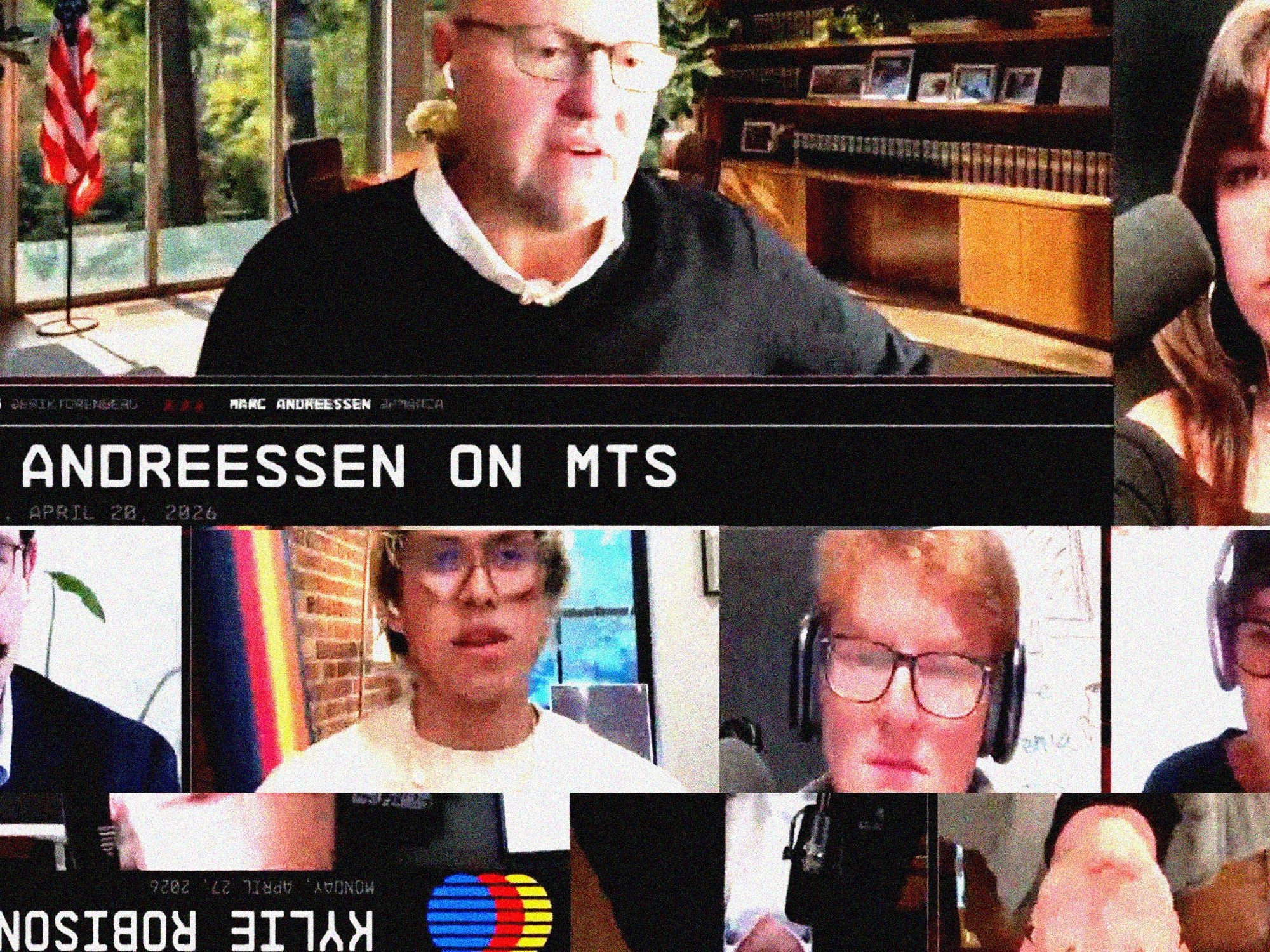
To understand the network's offerings, I dedicated a week to consuming content exclusively from MTS. My initial experience was far from impressive; an attempt to tune in early in the morning yielded a message stating the network was offline. As I navigated its programming, I discovered that much of MTS's content resembled amateur Twitch streams rather than professional news reporting. Compounding my disillusionment was a lack of structured broadcasts and a failure to communicate schedules effectively.
Later, I reviewed the launch episode, which began with a flashily produced sizzle reel filled with clips from various notable figures in the tech domain. The hosts, Theo Jaffee and Sofia Puccini, opened the show discussing audience reactions to MTS, giving it a self-indulgent flair that some viewers found off-putting.
An Amateurish Feel
The quality of discussions on MTS piqued my interest but often veered into tedious territory. Extended segments featuring industry insiders like Marc Andreessen bordered on monologues, with little interaction from the hosts. Such exchanges failed to engage viewers, evoking comparisons to a casual YouTube or Twitch stream rather than a serious news platform.
Moreover, the show heavily relied on screen-sharing segments, where hosts would read updates from current news—a format that often felt redundant. Critics have noted that MTS acts more like a platform for the tech elite to communicate among themselves, reinforcing the echo chamber effect that characterizes many Silicon Valley discussions.
Mixed Reception and Viewer Engagement
In the early days, MTS drew in over 280,000 viewers on its launch day. However, this initial wave did not sustain, with viewership declining significantly soon after. Critics argue that MTS primarily caters to an audience already familiar with the Andreessen Horowitz ideology. This inherent bias leads to criticisms that the service lacks diversity in perspectives and merely functions as a district for insider narratives.
Challenges Ahead
Running a successful media outlet is notoriously challenging—something Andreessen Horowitz learned when it launched Future, which closed after 18 months. Media expert Rodney Benson highlights MTS as an "amenity" for the firm rather than a profitable enterprise, pointing out that the self-referential nature of the content may hinder its narrative-shifting goals.
Though MTS offers occasional engaging content through unique bookings, like a dialogue between Taylor Lorenz and Balaji Srinivasan, the duration often sags under long-winded discussions that struggle to maintain viewer interest.
Conclusion: The Limitations of Tech News
After a week steeped in MTS, it became clear that the network encapsulated the barriers of tech reporting. While it showcases the fast-paced world of Silicon Valley, the narrow lens appeared disconnected from the broader societal issues at play. With protests for workers’ rights and other significant events unfolding outside the tech bubble, MTS gives the impression of a world that is insular and insulated. It raises the question: can MTS evolve beyond a mere echo chamber to provide comprehensive narratives about the rapidly changing landscape of technology?
Popular news
A small plane crash while touring the Nazca Lines in Peru has resulted in 13 fatalities, including tourists and crew.





Subscribe to
our news
Get the most important updates and top stories in your inbox.