





 Business17 May 2026
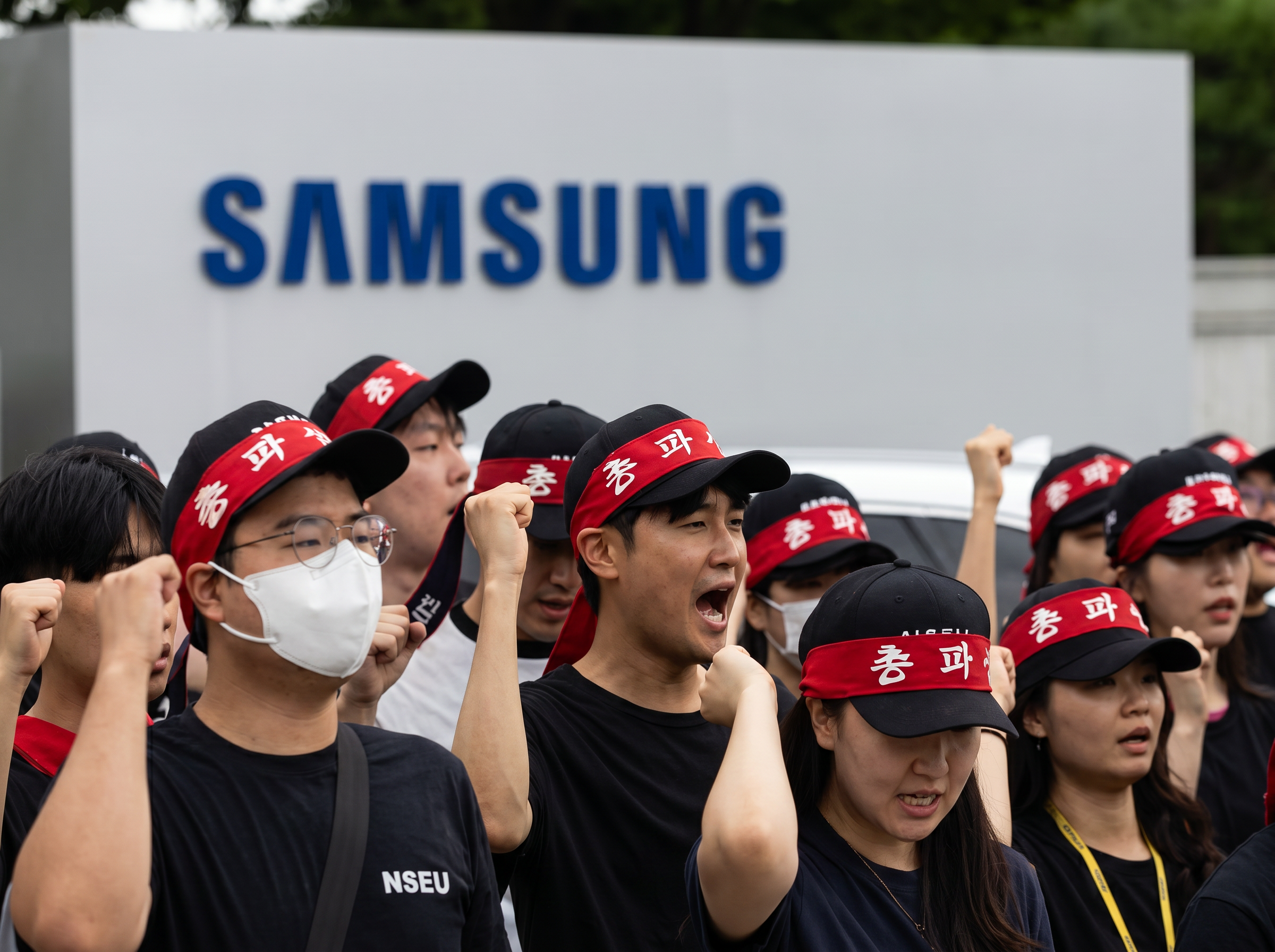
Massive Labor Strike at Samsung's Chip Plants Threatens AI Production
A planned strike at Samsung's memory chip plants could cripple AI production, affecting the future of semiconductors and the tech industry.
Major Labor Strike at Samsung
Nearly 45,000 unionized workers at Samsung's memory chip facilities are gearing up for an 18-day strike starting May 21, marking a potential seismic shift in the semiconductor industry. This strike, aimed at advocating for better compensation and bonuses, threatens to disrupt the production of DRAM and high-bandwidth memory (HBM) chips, which are crucial for supporting the rapidly evolving artificial intelligence (AI) sector.
As Samsung together with its rival SK Hynix commands a significant portion of both the global DRAM and HBM markets, the repercussions of this labor dispute could resonate throughout the tech industry and affect the ongoing AI revolution.
Context of the Strike
Samsung is responsible for producing approximately one-third of the world's DRAM, which is essential for nearly all digital devices, including phones, laptops, and data centers. Alongside SK Hynix, the two companies represent about two-thirds of the global DRAM market and dominate the HBM segment—an area crucial for AI technology. With $73 billion allocated for semiconductor research and development this year, Samsung's strategic position makes it an indispensable player in the AI landscape.
The planned strike from May 21 will be the largest in the semiconductor sector's history. This disruption could magnify supply challenges for AI hyperscalers, firms that heavily rely on these memory components.
Reasons for the Strike
In September of the previous year, SK Hynix negotiated a deal with its union, promising 10% of annual operating profits be allocated as bonuses while lifting limits on these payouts. Comparatively, Samsung’s unions are asking for 15% of operating profits as a bonus pool, the removal of the cap on bonuses, and a 7% wage increase.
Samsung's management counter-offered approximately 13% as a one-time bonus for 2026, which the union deemed insufficient. This standoff has contributed to a drain of talent; about 200 Samsung employees have transitioned to SK Hynix in recent months, exacerbating competitive pressures in the industry.
Impact of Potential Strike
Samsung’s management is concerned about the ramifications of a full-scale labor strike. A recent one-day walkout saw a 58% drop in foundry output and an 18% decline in memory fabrication. If the 18-day strike proceeds, analysts predict 30 trillion to 100 trillion won in potential losses for the company, as they begin scaling back operations to mitigate the effects of prolonged production halts.
The competitive landscape is intensifying; SK Hynix recently surpassed Samsung as the leading DRAM manufacturer for the first time in 33 years, driven largely by its achievements in HBM for AI applications.
Economic Stakes and Market Reactions
The implications of the strike stretch beyond the semiconductor industry into broader economic territories. Discussions arose recently regarding a citizen's dividend related to the gains from the AI boom, which has stirred market sentiments. A proposal from South Korea's presidential office to distribute wealth generated from AI advancements led to notable fluctuations in the Korea Composite Stock Price Index (KOSPI), showcasing the market's sensitivity to labor disputes involving major players like Samsung and SK Hynix.
Such economic dynamics illustrate the crucial intersection of labor relations, technology, and market forces, reminding stakeholders that the stability of the semiconductor industry is vital for both national and global economies.
Popular news
Netanyahu dismisses West Bank violence as actions of 'juvenile delinquents' during a UN speech, focusing on Israel's military success against Hezbollah.





Subscribe to
our news
Get the most important updates and top stories in your inbox.
