





 World19 Apr 2026
Mines in the Strait of Hormuz: Navigating Maritime Threats
Iran's placement of mines in the Strait of Hormuz raises maritime safety concerns. Germany offers support for mine clearance amidst geopolitical tensions.
Introduction
Concerns over maritime safety have surged following reports that Iran has placed naval mines in the strategically critical Strait of Hormuz. These developments come amid heightened regional tensions and pose significant risks for maritime navigation. Germany, recognizing the potential for disruption, has announced plans to support mine clearance efforts, sparking discussions on international maritime security.
Iranian Mine Placement and International Response
On Friday, Chancellor Friedrich Merz of Germany declared the country’s readiness to assist in mine clearance in the Strait of Hormuz, stating, "We could provide mine-clearance vessels — we are good at that." His comments reflect growing concerns among European leaders regarding safe navigation in the area after recent escalations in conflict.
The situation escalated further when Iranian officials initially declared the strait "completely open" for traffic during a ceasefire, only to reverse the statement shortly thereafter, reaffirming that the waterway could be potentially closed again. This contradictory messaging from Iran raises questions regarding maritime safety and the true extent of the mines' deployment in the strait.
Expert Opinions on Mine Presence
Maritime experts are divided over the actual presence of mines in the Strait of Hormuz. Johannes Peters, an undersea warfare expert at Kiel University's Institute for Security Policy, expressed skepticism: "We aren't even certain that there are mines [in the Strait of Hormuz]. But the underlying threat is enough [to deter passage]. For now, nobody in the war zone can actually go and check." This uncertainty complicates the situation for vessels traversing these waters.
Understanding Naval Mines
Naval mines are explosive devices deployed underwater, designed to detonate upon proximity to a vessel. Three main types exist:
- Drifting mines that float freely at or near the surface.
- Moored mines that are anchored below the surface.
- Bottom mines that lie on the seafloor.
Modern mines are equipped with advanced triggering mechanisms that can activate based not only on physical contact but also on magnetic effects, sound waves, or pressure changes from passing ships. This technological advancement greatly enhances their effectiveness but also complicates clearance efforts.
The Lengthy Process of Mine Clearance
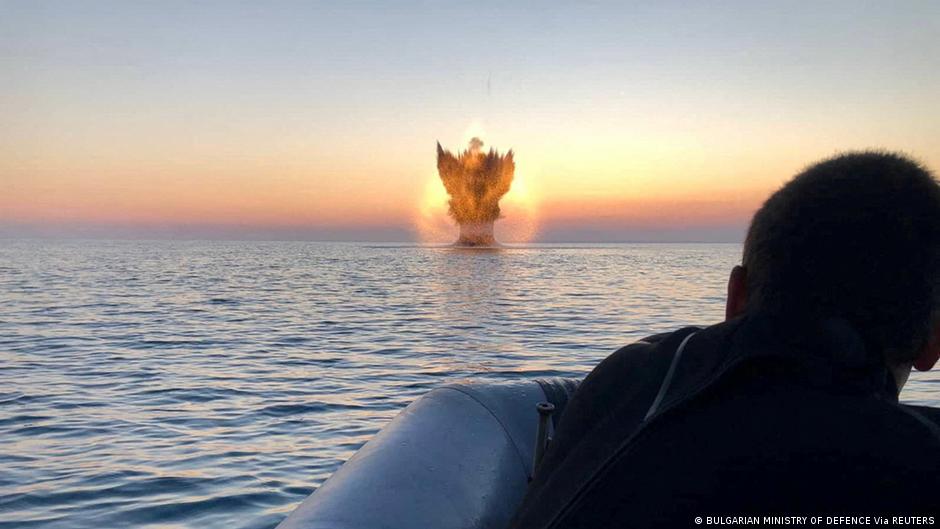
Clearing mines involves a meticulous and time-consuming process known as mine hunting and sweeping. Specialists must first detect suspicious objects before determining their threat level. If a mine is confirmed, experts can either disarm it, recover it, or detonate it safely. The use of drones has emerged as a promising way to enhance this process.
According to Mykola, a Ukrainian soldier involved in mine clearance operations, leveraging drones allows for safer identification and destruction of mines without risking human lives. Similarly, Germany's navy has begun integrating drones into their mine-hunting missions, significantly reducing the risk to their personnel. Frigate Captain Andreas noted that autonomous systems now largely replace the need for manned vessels in these dangerous operations.
Future Innovations in Drone Technology
Drone technology is rapidly evolving, with companies like Euroatlas developing advanced underwater drones such as the Greyshark. These drones are designed to operate in sensitive regions like the Strait of Hormuz, where conventional mine-hunting vessels might face direct threats from land-based weapons.
Markus Beer, Chief Sales Officer at Euroatlas, explained that the Greyshark drones can reach wider areas without putting personnel at risk, enhancing reconnaissance capabilities in hostile environments. Upcoming models are set to be equipped with fuel cell systems for extended missions, making them more effective for prolonged monitoring and clearance tasks.
Conclusion
The situation in the Strait of Hormuz remains precarious. While the deployment of mines poses an uncertain risk to shipping lanes, international efforts, particularly from Germany, may provide a pathway to establish safer maritime conditions. As tensions persist, the intersection of advanced technology and strategic maritime security will be crucial for navigating this volatile region.
Popular news
A small plane crash while touring the Nazca Lines in Peru has resulted in 13 fatalities, including tourists and crew.



Subscribe to
our news
Get the most important updates and top stories in your inbox.
