




 Technology25 Apr 2026
NASA's Curiosity Rover Discovers Complex Carbon Compounds on Mars
Curiosity rover's findings of complex carbon on Mars hint at ancient biological building blocks, raising questions about past life on the Red Planet.
Introduction
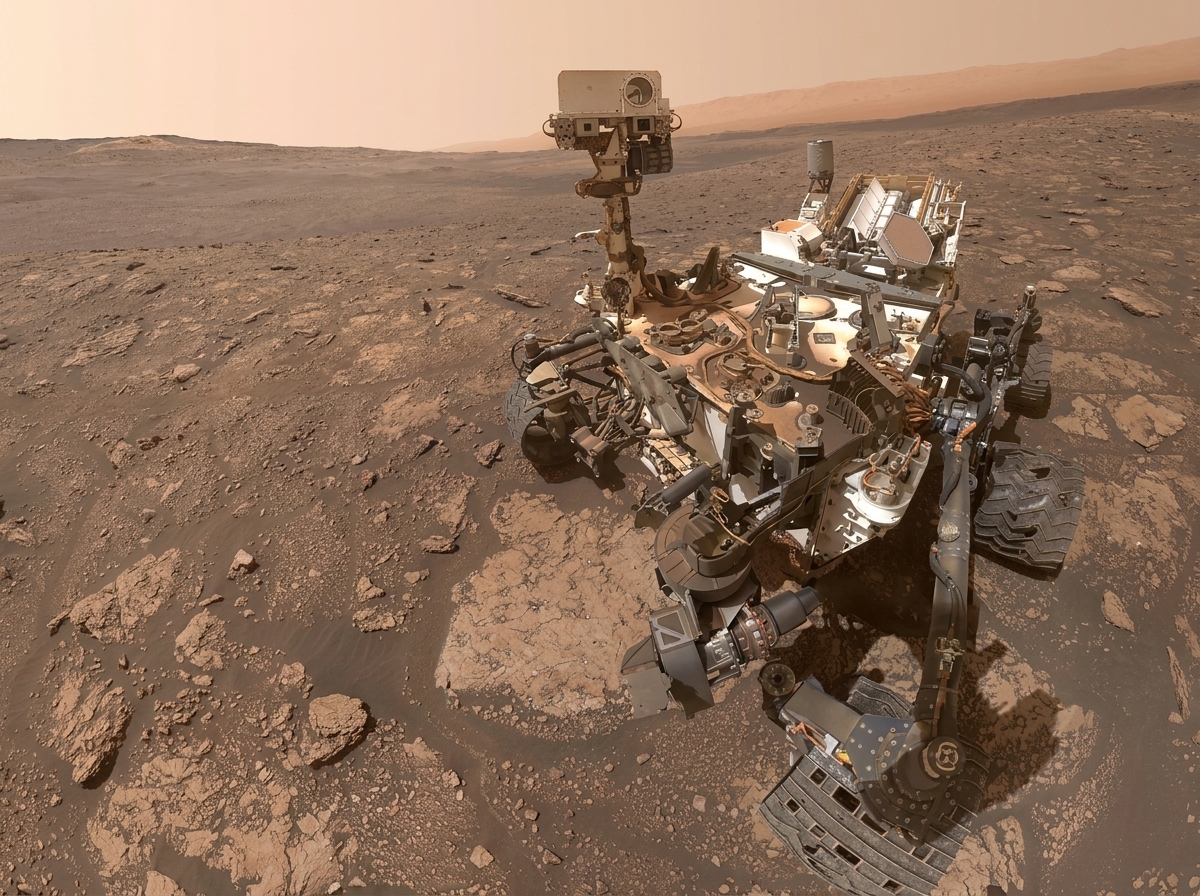
NASA's Curiosity rover has made a groundbreaking discovery on Mars, revealing the presence of complex carbon compounds in Martian rocks. This significant breakthrough includes the identification of 21 different organic molecules, seven of which had never been previously observed on the planet. These findings not only shed light on Mars' past but also suggest the necessary conditions existed for these organic materials to be preserved for billions of years.
Discovery Details
Curiosity’s Innovative Experiment
The rover conducted a unique experiment on a rock sample it collected six years ago, employing a special chemical and heat treatment process. According to Charles Malespin, the lead scientist for the rover’s chemistry lab, this technique uncovered the largest set of organic molecules found to date on Mars, indicating a richer Martian chemistry than previously understood.
The Importance of Organic Molecules
The findings were published in Nature Communications, marking a pivotal moment in the search for potential life on Mars. The study indicates that the planet not only had basic ingredients for biology but also retained these complex compounds in its rocks over eons. While the discovery does not confirm the existence of life, it suggests that ancient Mars had an environment that could have supported the preservation of such organic materials. Amy Williams, the paper's lead author from the University of Florida, emphasized the importance of this discovery, noting that it expands the catalog of molecules that could be precursors to life as we know it on Earth.
Notable Discoveries
New Organic Molecules
Among the 21 discovered molecules, some were entirely new to Martian studies, including a nitrogen heterocycle—a ring-shaped structure that is more intricate than simple carbon chains. This finding is particularly significant as nitrogen is a key component of DNA and RNA, the fundamental building blocks of life on Earth. Williams described the unveiling of these nitrogen heterocycles as "profound," given their absence in prior Mars measurements and meteorite falls.
Supporting Evidence of Life
Other detected compounds, such as naphthalene and benzothiophene, suggest that the original material within the rock was complex, supporting the hypothesis that some organic molecules might have originated from living organisms, although they can also form through chemical reactions involving water and rock.
Implications for Mars Exploration
Potential for Finding Past Life
The Martian rock, dating back to approximately 3.5 billion years, was collected from Gale Crater, a region that once harbored water. If life ever emerged on Mars, this site is a prime candidate where scientists might find chemical traces of ancient biological activity.
Survival of Organic Material
The clay-rich setting of the rocks may explain the survival of these chemicals; on Earth, clay has the ability to trap and protect organic matter from degradation. This preservation raises optimism for future Mars missions aimed at detecting signs of past life. Given the harsh conditions on Mars today, researchers are encouraged by the discovery that the radiation and climate have not completely obliterated the organic material.
Conclusion
In conclusion, the Curiosity rover's findings significantly enhance our understanding of Mars' geological and potential biological history. As exploration of the Red Planet continues, scientists are hopeful that these discoveries may lead to evidence of past microbial life and deepen our comprehension of the conditions that could support life beyond Earth.
Popular news
A small plane crash while touring the Nazca Lines in Peru has resulted in 13 fatalities, including tourists and crew.




Subscribe to
our news
Get the most important updates and top stories in your inbox.