




 Technology08 May 2026
NASA's Jet Propulsion Lab Achieves Breakthrough in Rotor Technology for Mars Missions
NASA's latest rotor technology advancements promise to enhance future Mars helicopter missions, enabling heavier payloads and longer flights.
Breakthrough at NASA's Jet Propulsion Laboratory
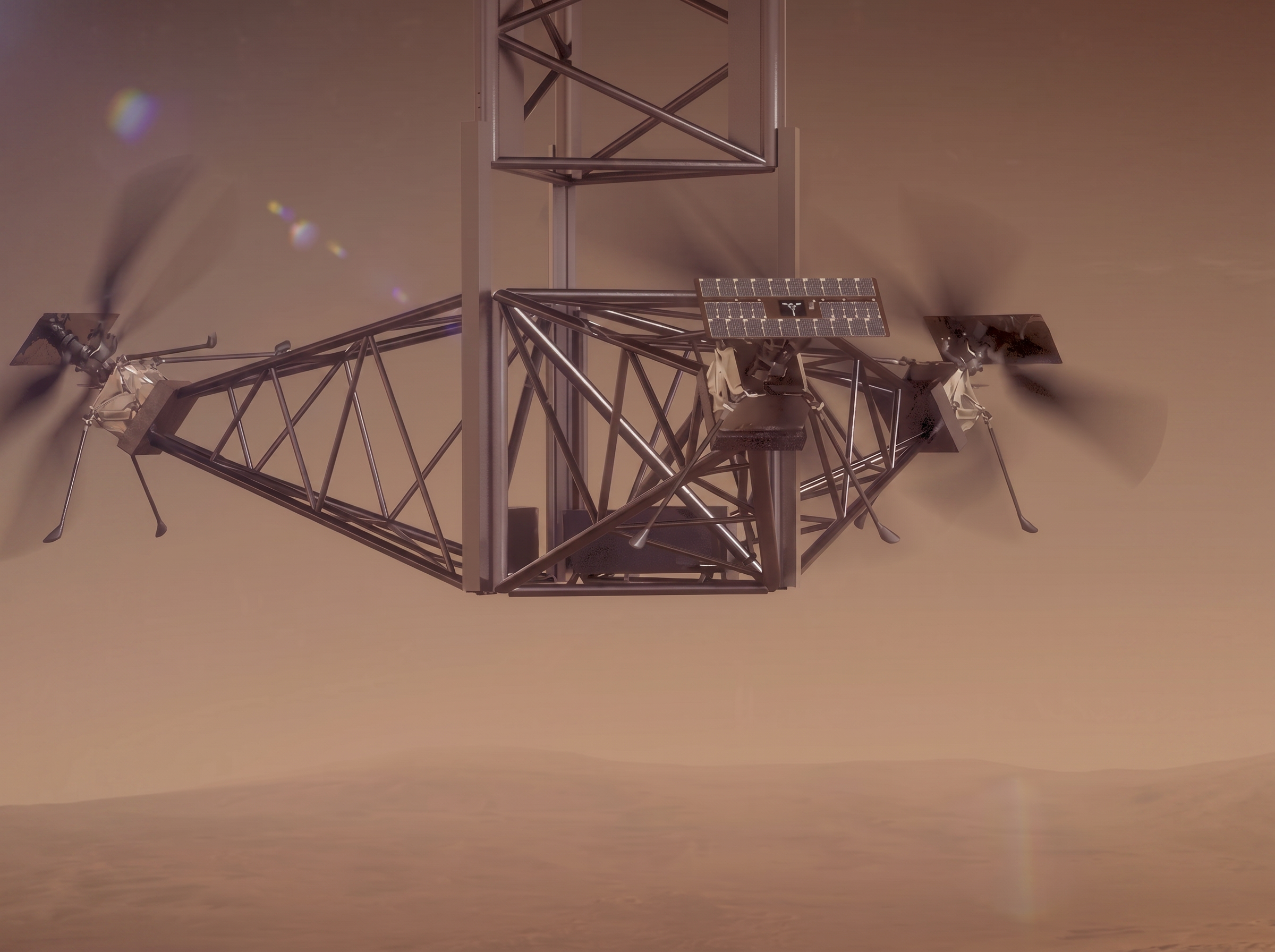
In a significant advancement for space exploration, engineers at NASA's Jet Propulsion Laboratory (JPL) have developed cutting-edge rotor technology aimed at facilitating next-generation helicopters for Martian missions. This innovation is designed to enable these helicopters to carry heavier payloads and cover greater distances in the thin atmosphere of Mars.
Building on Ingenuity's Success
NASA's initial foray into Martian aerial exploration was marked by the Ingenuity helicopter, which achieved a remarkable milestone by completing 72 flights during its mission. Originally intended to fly just five times over 30 days, Ingenuity far surpassed expectations, showcasing the potential of aerial vehicles on other planets. After delivering invaluable data during its flights, Ingenuity concluded its mission in January 2024 following a crash landing, leaving behind a legacy of innovation and exploration.
The Upcoming SkyFall Mission
Looking ahead, NASA is gearing up to send three additional helicopters to Mars as part of the SkyFall mission, slated to launch as early as late 2028. These new rotorcraft will ride aboard a nuclear-powered spacecraft known as Space Reactor-1 (SR-1), emphasizing NASA's commitment to utilizing advanced technology in its exploratory missions. The SkyFall mission aims to enhance previous successes by deploying these enhanced helicopters to explore regions that are difficult for ground vehicles to access.
Implications for Future Exploration
The breakthroughs in rotor technology not only signify a leap forward for NASA's aerial capabilities on Mars but also exemplify a new approach to planetary exploration. With Ingenuity paving the way, the future Martian helicopters are poised to revolutionize how scientists study the red planet, making it possible to reach further and gather more data than ever before.
Enthusiasts and researchers alike are eagerly anticipating the implementation of these innovations in future missions, hopeful that they will bring further insights into Mars' environment and geology. With ongoing developments at JPL, the possibilities for exploration are expanding, as NASA continues to push the boundaries of aerospace technology.
Popular news
A small plane crash while touring the Nazca Lines in Peru has resulted in 13 fatalities, including tourists and crew.





Subscribe to
our news
Get the most important updates and top stories in your inbox.