





 Technology27 May 2026
New Species of Tiny Octopus Discovered in the Galápagos Islands
A new species of tiny octopus, Microeledone galapagensis, has been discovered in the deep sea off the Galápagos Islands, revealing the ocean's mysteries.
Discovery of a Unique Creature
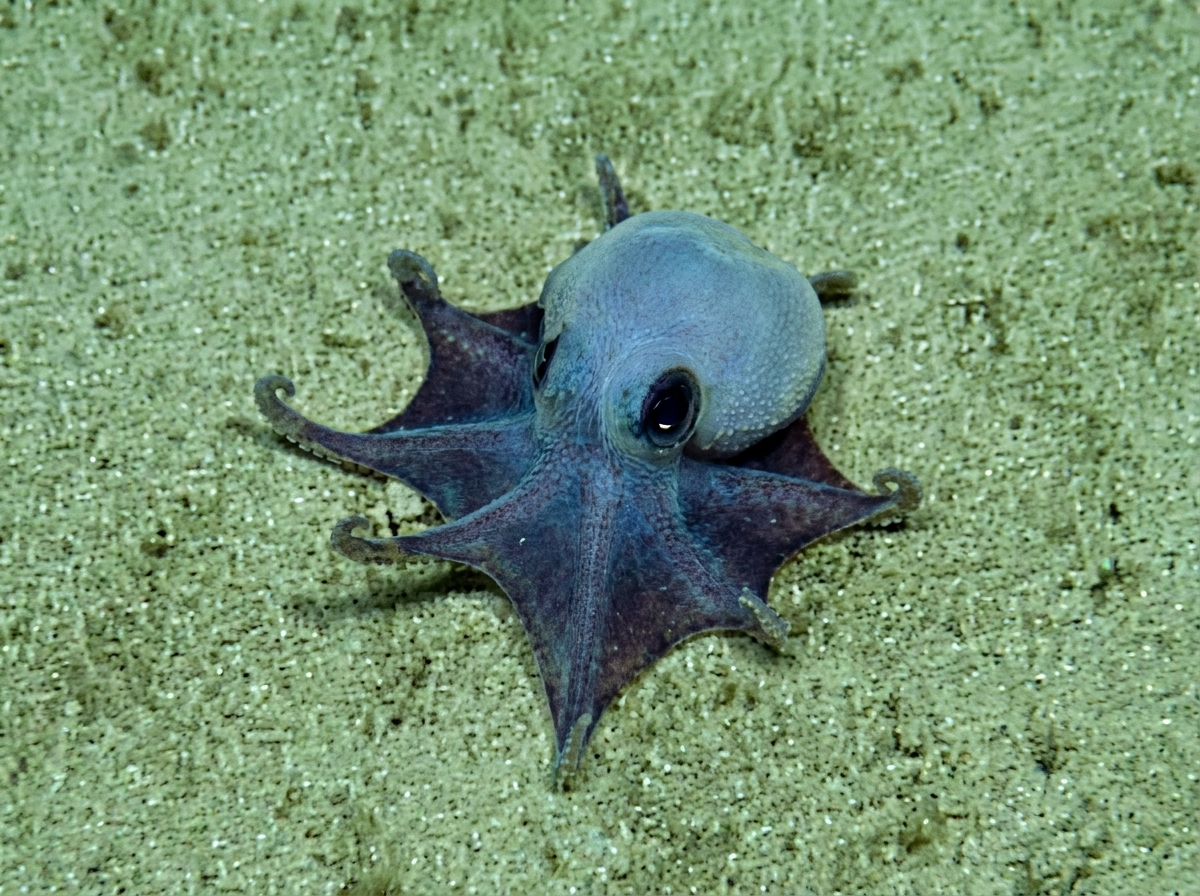
During a deep-sea expedition in 2015, researchers from Chicago's Field Museum encountered a fascinating new species of tiny octopus, now named Microeledone galapagensis. This vibrant blue octopus, measuring just small enough to fit comfortably in the palm of a hand, was discovered while exploring the ocean depths off the coast of the Galápagos Islands.
The Expedition
The initial sighting took place during a mission aboard the research vessel E/V Nautilus. The team utilized a remotely operated underwater vehicle (RoV) to investigate the ocean floor around Darwin Island, located in the northern section of the Galápagos archipelago. At a depth of 1,773 meters (5,817 feet), they captured video footage of the small octopus, notable for its striking blue hue.
After capturing the specimen, the researchers faced a dilemma: they were unsure of its species classification. To clarify this, they reached out to Janet Voight, an expert at the Field Museum. Voight quickly recognized the octopus as something rare and special, stating, "Right away, I knew it was something really special. I’d never seen anything like it."
Non-Destructive Analysis Using Technology
Since only one specimen was collected, the team found themselves in a challenging position. Dissecting the octopus for a traditional analysis would risk damaging it, leading to the decision to employ nondestructive x-ray computed tomography (CT) for further study. This advanced technique allowed them to create and compile thousands of scans, resulting in a detailed 3D model of the creature, providing insights into its morphology without harming it.
The analysis revealed numerous unique features, from its squat tentacles with minimal suckers to nearly colorless skin on its back and a distinctive funnel-shaped organ.
Significance of the Findings
The identification of Microeledone galapagensis not only expands the catalog of known cephalopods but also emphasizes the importance of deep-sea exploration and conservation. Voight highlighted the rarity of such discoveries, stating, "If you took all the land on Earth and pieced it together, you would not cover the Pacific Ocean. The oceans are so big, and there’s so much left to explore."
Conclusion
This small octopus serves as a reminder of the vast mysteries still hidden within our oceans. With expedition efforts underway to better understand these unexplored ecosystems, conservation becomes imperative. As Voight reflects, "These are little octopuses that live in the deep sea, and hardly anybody on Earth has ever gotten to see them. I just feel lucky that I got to work with them."
The discovery of Microeledone galapagensis underscores the significant role of scientific exploration in uncovering the biological diversity of our planet and the pressing need for ongoing marine conservation efforts.
Popular news
New York has declared a disaster emergency over rising measles cases, especially among under-immunized populations, with 108 confirmed cases.





Subscribe to
our news
Get the most important updates and top stories in your inbox.
