





 World19 May 2026
Putin's Visit to Beijing: A Diplomatic Maneuver in a Multipolar World
Putin's Beijing visit underscores China's growing diplomatic role amid U.S.-Russia tensions, with energy and military technology at the forefront.
Overview of Putin's Beijing Visit
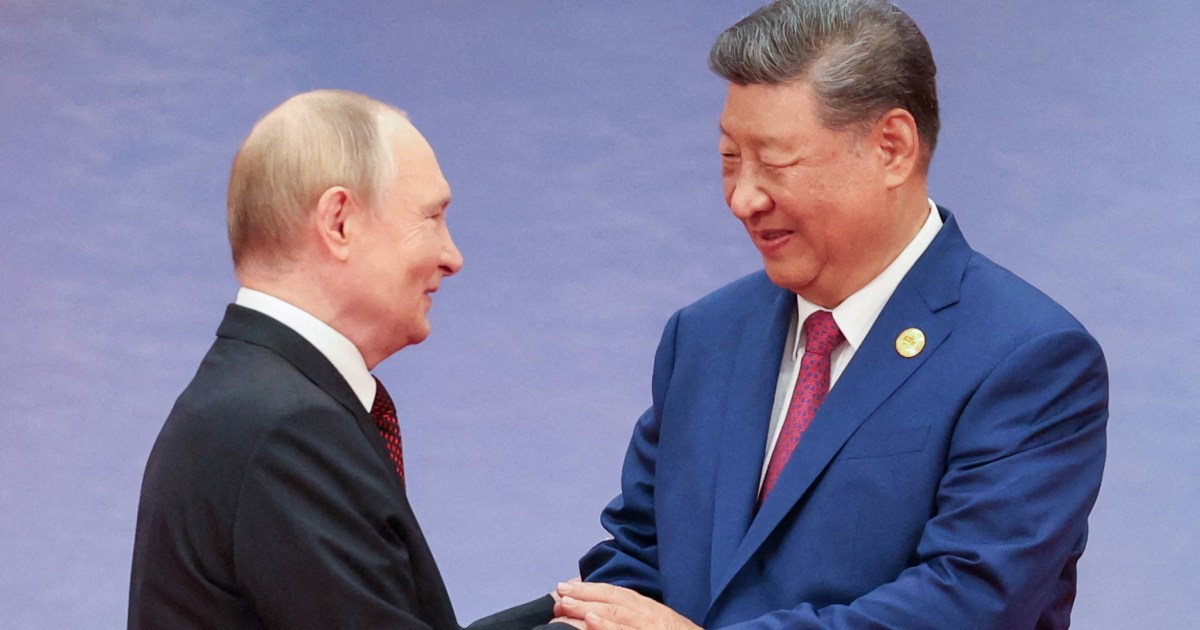
Russian President Vladimir Putin's arrival in Beijing this Tuesday follows closely on the heels of U.S. President Donald Trump's notable meeting with Chinese leader Xi Jinping. This sequence of diplomatic visits highlights China's increasing role as a key player on the global stage, especially amidst ongoing tensions between the United States and Russia. According to analysts, these events frame China's strategic partnership with Russia, focusing largely on energy cooperation and military technology.
Significance of Timing
Contextual Background
Putin's visit to China is particularly significant as it takes place just a day after Trump's departure from Beijing, where he discussed broad trade agreements with Xi. However, despite the optimism projected by Trump, analysts point out that substantial progress on contentious issues such as Taiwan and Iran remained elusive. This backdrop favors Putin, affording him confidence that China will continue to value its relationship with Russia.
Diplomatic Leverage
China's hosting of back-to-back visits not only illustrates its enhanced diplomatic leverage but also its capacity to engage with competing global powers on its own terms. As both leaders converge toward a common cause, the pronounced diplomatic engagement reflects a collective response to Western sanctions and geopolitical maneuvering.
The Nature of Russia-China Relations
A Stable Partnership
Experts agree that while no major shifts in the dynamics of Russia-China relations are expected during this meeting, Putin's visit represents an opportunity to deepen economic collaboration and military technology exchanges. Marina Miron, a defense studies researcher at King’s College London, noted that both countries are moving toward a more integrated economic relationship, particularly concerning energy resources.
Russia as the Junior Partner
Conversely, the power dynamics indicate that Russia is now viewed as the junior partner in this strategic alliance, largely due to the repercussions of Putin's military actions in Ukraine. Timothy Ash of Chatham House remarked that Putin is now seeking greater military support from China during this visit, thereby underscoring the reality that China holds significant sway in this relationship.
China’s Diplomatic Positioning
Neutral Superpower Ambitions
China's strategy to act as a neutral mediator in global conflicts is becoming increasingly clear, especially as it seeks to maintain a diplomatic stance that does not align exclusively with any superpower. This was evident in the context of the recent U.S.-Israel conflict regarding Iran, where President Xi is keen on positioning China as a key player that can engage in important global discussions while maintaining neutrality.
Potential Topic Discussions
While discussions on Ukraine and shared intelligence with Iran inevitably arise, analysts predict that China will not pressure Russia for a specific outcome, focusing instead on dialogue and mediation. Miron emphasizes that while Ukraine will be a topic of discussion, China’s approach will be without any ultimatums, aiming instead for a peaceful resolution.
Conclusion
Putin's visit may not yield dramatic diplomatic outcomes, but it underscores an essential truth: Beijing, by hosting both U.S. and Russian leaders in succession, reinforces its position as a crucial player in a fragmented world. China’s role as a 'neutral superpower' continues to evolve, making the dynamics between these global powers a focal point of international observations.
Popular news
Nuveen acquires Schroders, creating a $2.6 trillion asset management powerhouse.



Subscribe to
our news
Get the most important updates and top stories in your inbox.
