




 World30 May 2026
Shangri-La Dialogue: US Defense Secretary Critiques China's Regional Dominance
US Defense Secretary Hegseth emphasizes no country's dominance in Asia at the Shangri-La Dialogue, urging allies to boost defense spending.
US Defense Secretary Stresses Regional Power Balance at Shangri-La Dialogue
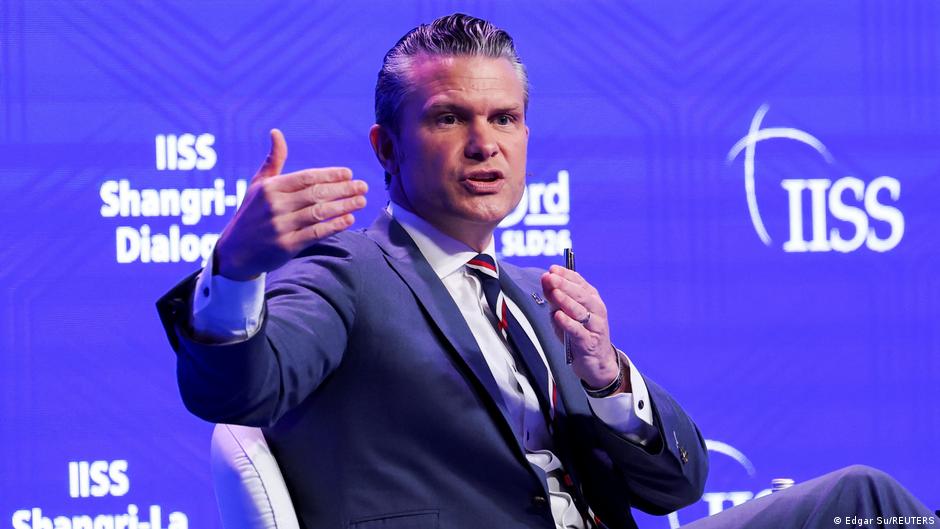
During his address at the Shangri-La Dialogue in Singapore, US Defense Secretary Pete Hegseth raised significant concerns regarding China’s expanding military influence in Asia. He emphasized the necessity for a collective Asian defense posture, arguing that no nation—specifically mentioning China—should achieve unchallenged dominance over the region.
Call for Enhanced Defense Spending
Hegseth articulated a vision of a stable equilibrium in Asia, advocating for US allies and partners to increase their defense spending to 3.5% of their GDP. "The era of the United States subsidizing the defense of wealthy nations is over... We need partners, not protectorates," Hegseth stated. He underscored the importance of equitable contributions among allies, declaring that a robust alliance requires all members to actively participate in their defense obligations.
Concerns Over China’s Military Buildup
The Defense Secretary expressed that there is a legitimate concern regarding China's historic military expansion and activities, which he described as alarming.
"When we look across the region today, there is rightful alarm regarding China's historic military buildup..." Hegseth remarked, stressing that while the US is committed to maintaining a stable power balance, it does not aim for unnecessary confrontations. He noted an improvement in US-China military relations marked by increased communications, although he affirmed the US's readiness to respond if necessary.
Insights on US Military Strategy
Hegseth pointed to an expectation that US engagement in Asia will adapt, echoing a sentiment of wanting to strengthen military ties with regional partners. He also mentioned that the current state of US-China relations has seen improvements, exemplified by more frequent military-to-military interactions.
Contrastingly, he observed that Taiwan was conspicuously absent in his speech, interpreting this omission as indicative of a deliberate negotiation strategy. When queried about the stalled arms sale deal with Taiwan, Hegseth noted that the final decision would rest with President Donald Trump.
Future of the Shangri-La Dialogue and Regional Stability
As discussions at the Shangri-La Dialogue continue, experts suggest that the need for military deterrence and readiness may eclipse the need for diplomatic forums like these, a point highlighted by DW's chief international editor, Richard Walker.
The Shangri-La Dialogue assembles defense officials and experts from approximately 45 countries, aiming to foster open dialogue and construct diplomatic bridges amidst complex geopolitical challenges. Hegseth's remarks signal a pivotal moment in US foreign policy as it navigates a rapidly changing security landscape in Asia.
Popular news
New York has declared a disaster emergency over rising measles cases, especially among under-immunized populations, with 108 confirmed cases.



Subscribe to
our news
Get the most important updates and top stories in your inbox.