 Business19 May 2026
The AI Economy Reshapes the American Dream: Blue-Collar Workers on the Rise
Amidst an AI hiring slowdown, skilled blue-collar workers are in high demand, reshaping the job landscape.
The Changing Landscape of the American Dream
In an era dominated by advancing artificial intelligence (AI), the traditional pathway to the American Dream is undergoing a significant transformation. While the perception has long been that a college degree is essential for securing a prosperous future, companies like AT&T are discovering a different reality: a substantial shortage of skilled blue-collar workers in a labor market increasingly affected by AI's reach.
AT&T’s Quest for Skilled Labor
According to AT&T's CEO John Stankey, the telecom giant is in urgent need of skilled blue-collar workers capable of handling complex infrastructure tasks.
"We need people who know how to actually work with electricity, we need people who understand photonics... It's not like we're growing them on trees in the United States," Stankey explained in a recent interview.
Despite an expected record number of college graduates, the company reports struggles in finding skilled technicians to support significant infrastructure projects.
The Great Shift in Employment Trends
AI's influence is particularly palpable in industries that have thrived on entry-level positions typically filled by new graduates. As organizations adapt to this new reality, many roles once thought secure are increasingly susceptible to automation. For instance, early-career employees in sectors susceptible to AI integration, such as marketing and IT, have been unable to experience the typical rise in employment opportunities that characterized prior decades.
"Is the American Dream going away because of AI? I think the fears are all very valid," voiced May Hu, a tech consultant and social media influencer.
Opportunities in Blue-Collar Jobs
Contrasting the challenges faced by recent college graduates is the burgeoning demand for blue-collar labor, particularly in the context of the AI-driven infrastructure boom. Companies like Nvidia and AT&T are emphasizing the necessity for plumbers, electricians, and technicians capable of constructing and maintaining the data centers propelling the AI revolution.
According to Nvidia CEO Jensen Huang, this represents "the largest infrastructure buildout in human history that is going to create a lot of jobs, many of which will offer six-figure salaries."
Currently, AT&T plans to spend $250 billion over the next five years to extend its fiber network—15% of which will go toward hiring and training skilled technicians, demonstrating a major financial commitment to this workforce.
The Changing Perception of Education
Historically, Americans believed that a college education was the key to securing a place in the middle class. However, recent trends are stirring doubt in this notion, with rising student debt and slower returns on investment now creating significant skepticism.
Stankey asserts, "As a society... we've put a huge premium on a college degree. But in some cases, we may have missed the mark," advocating for a reevaluation of educational priorities and workforce training.
The Case of Young Workers
Recent data indicates that young workers, especially new graduates, face unprecedented challenges in entering the job market. Research from Stanford suggests a 16% slower employment growth for recent graduates in AI-exposed sectors, indicating the widespread disruption caused by AI.
Amid this uncertainty, the push for blue-collar training programs is becoming increasingly relevant. As AT&T recruits technicians, the company emphasizes the role that hands-on training plays in preparing workers for emerging job opportunities in the construction and telecommunications sectors.
Real-Life Success Stories
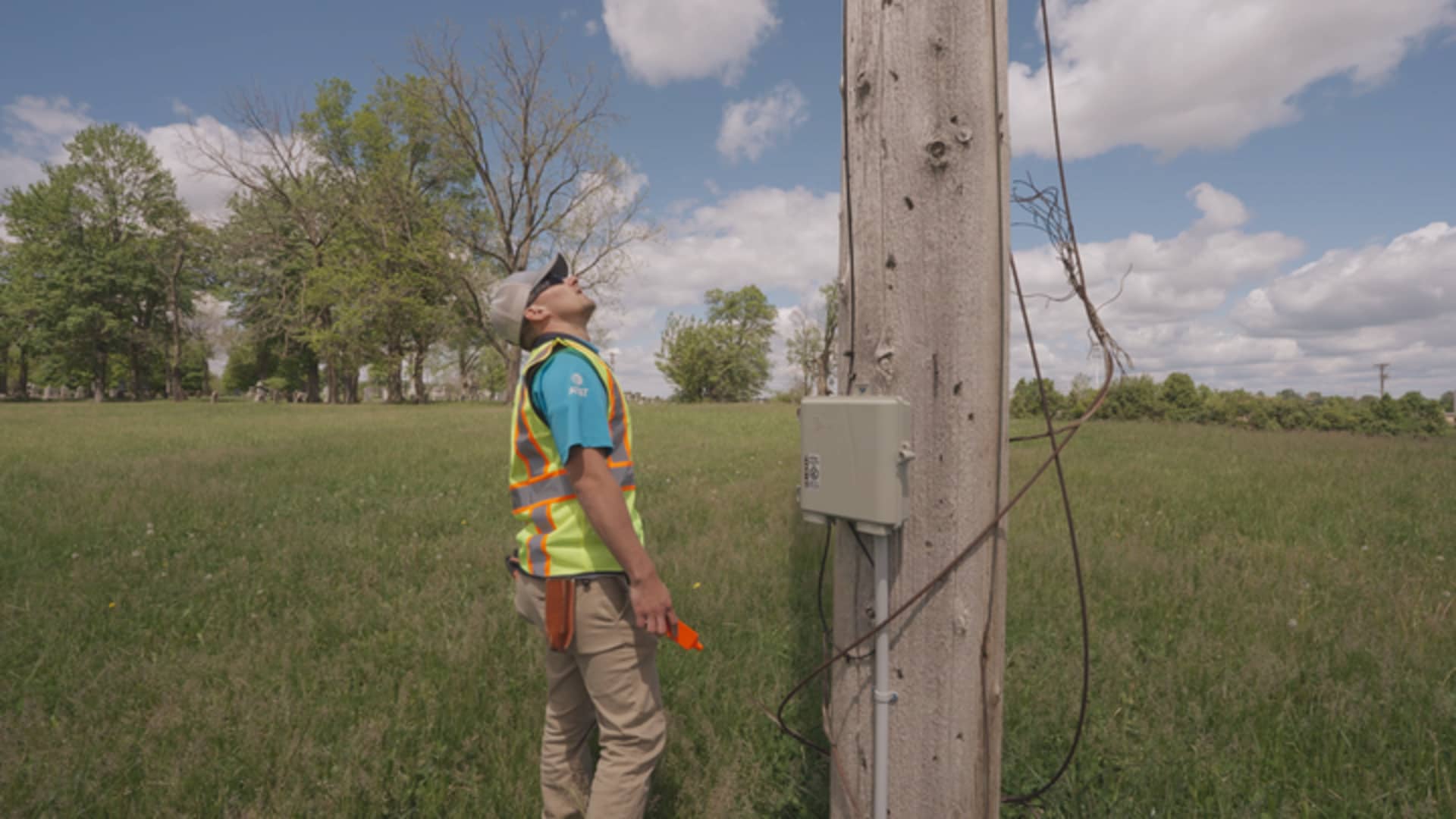
Individuals such as 24-year-old Kyson Cook, a premises technician with AT&T, exemplify the changing narrative. Having left college in pursuit of hands-on work, Cook now enjoys a fulfilling career, financial stability, and the ability to provide for his young family. "I climb telephone poles. It's awesome," said Cook. He added that he earns more than many of his college-educated peers, illustrating the tangible benefits of skilled labor careers in the current economy.
Final Thoughts
As the U.S. grapples with the ongoing implications of AI in the workforce, a fundamental shift in strategy appears necessary. Addressing the shortage of skilled tradespeople while modifying expectations around college education may represent the best path forward for a sustainable economic future. AT&T and other companies are leading this charge by creating legacies of skilled labor that align with the demands of the AI economy, ensuring that a new version of the American Dream emerges on the horizon.
Popular news
Nuveen acquires Schroders, creating a $2.6 trillion asset management powerhouse.





Subscribe to
our news
Get the most important updates and top stories in your inbox.