




 Technology06 May 2026
Tiny Trans-Neptunian Object 2002 XV93 Discovered to Have an Atmosphere
Astronomers detect a thin atmosphere around the tiny object 2002 XV93, challenging previous beliefs about celestial bodies beyond Pluto.
Discovery of an Atmosphere Beyond Pluto
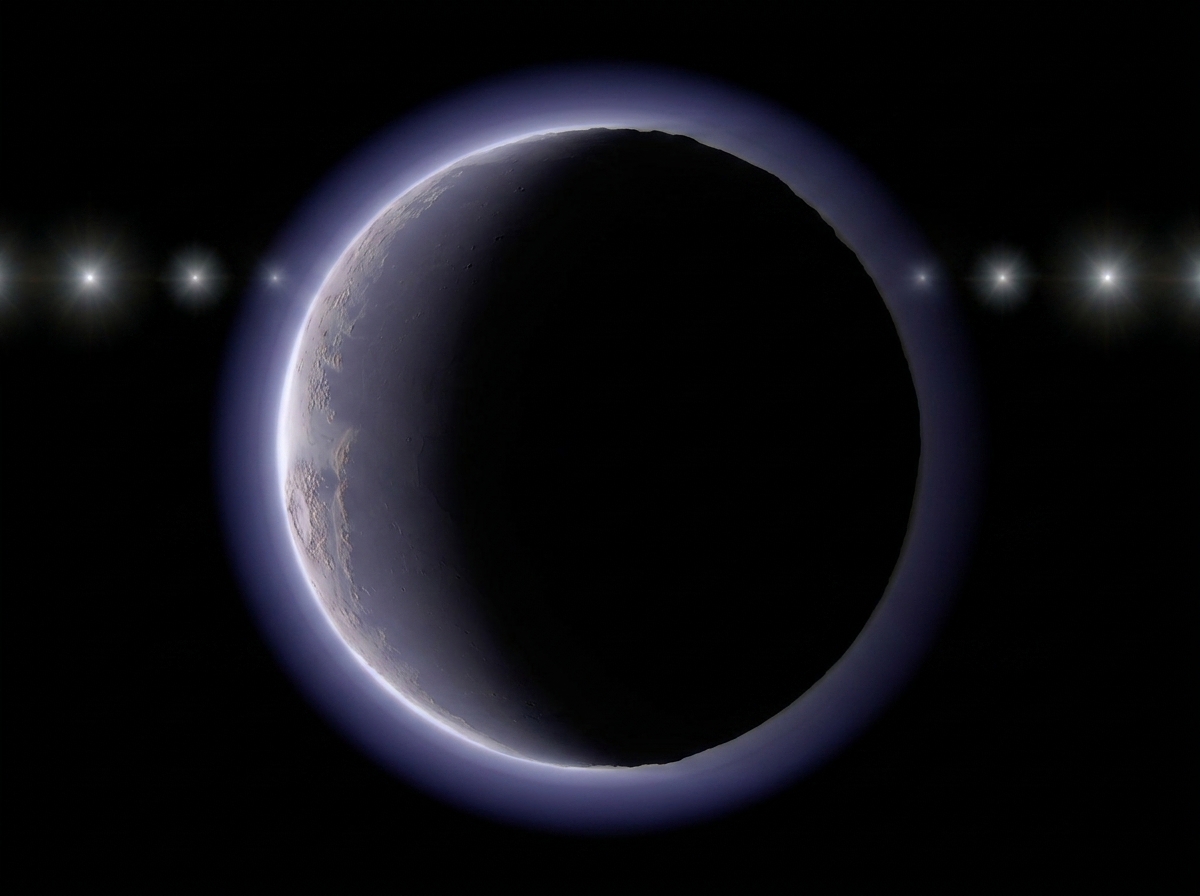
Astronomers have made a groundbreaking discovery regarding the Trans-Neptunian Object known as 2002 XV93, revealing it may possess a thin atmosphere. The revelation emerged during a stellar eclipse on January 10, 2024, raising questions about the capacity of small celestial bodies to retain atmospheres. This finding challenges long-held assumptions within the astronomical community.
Significant Findings and Measurements
Located far beyond Pluto, 2002 XV93 measures approximately 300 miles in diameter and resides within a region filled with leftover material from the early solar system. Nearly all research on such distant minor planets involves observing these ancient remnants as they pass in front of stars. During a rare alignment observed from East Asia, astronomers recorded a gradual change in starlight as 2002 XV93 eclipsed an unnamed star.
Traditionally, objects without atmospheres cause an abrupt disappearance of background starlight, but in this case, the telescopes captured a slow fading of light, indicating the presence of an atmosphere that scattered the starlight.
According to a new study published in Nature Astronomy, researchers estimate that the atmosphere surrounding 2002 XV93 has a surface pressure between 100 and 200 nanobars, making it thinner than Pluto’s but significant for its size. Lead author Ko Arimatsu indicated this marks the first detection of an atmosphere on a Trans-Neptunian Object located beyond Pluto.
Potential Formation Mechanisms
The discovery has left scientists pondering how this atmosphere came to exist, especially since theories suggest distant, small objects in the outer solar system should not be able to maintain atmospheres for extended periods due to low gravity. Possible explanations for the atmosphere include:
- Comet or Asteroid Impact: A recent collision could have released trapped gases, marking the origin of the atmosphere.
- Cold Volcanic Activity: The presence of cold volcanism might have vented gases instead of liquid lava, thereby forming an atmosphere.
Researchers suggest monitoring the object further will be crucial in understanding the origin of its atmospheric conditions. Current observations with the James Webb Space Telescope have yet to provide evidence of frozen materials suggestive of gas formation.
The Importance of Continued Research
While the current findings paint a fascinating picture of 2002 XV93, they also underline the need for more rigorous scientific investigation. If the atmosphere is transient, it could imply a unique event, whereas stable atmospheric cycles may indicate internal geological processes at work.
Scientists remain eager to uncover additional data to explain this surprising phenomenon, as it suggests that some Trans-Neptunian Objects could indeed host atmospheres, which could alter our understanding of the evolutionary processes of celestial bodies in our solar system.
Popular news
A small plane crash while touring the Nazca Lines in Peru has resulted in 13 fatalities, including tourists and crew.





Subscribe to
our news
Get the most important updates and top stories in your inbox.