




 Business09 May 2026
Trump Retracts EU Auto Tariff Proposal but Risks Persist for Buyers and Ports
Trump reassesses a potential 25% tariff on EU auto imports, impacting buyers and U.S. ports reliant on vehicle trade amidst inflation concerns.
Introduction
President Trump has announced a sudden withdrawal from plans to impose a 25% tariff on all passenger vehicle imports from the European Union (EU). This decision comes at a critical time as inflation concerns mount and U.S.-EU trade relations remain tenuous.
Implications of Tariff Threat
While Trump's decision mitigates immediate costs for consumers, the potential for new tariffs still casts a shadow over buyers, particularly those interested in high-end vehicles.
Rising Car Prices
Last year, the average price of a vehicle in the U.S. surpassed $50,000, making the prospect of tariffs particularly alarming for luxury car enthusiasts. A significant hike in import duties could further elevate the prices of brands like Porsche, BMW, and Mercedes.
Impact on Key U.S. Ports
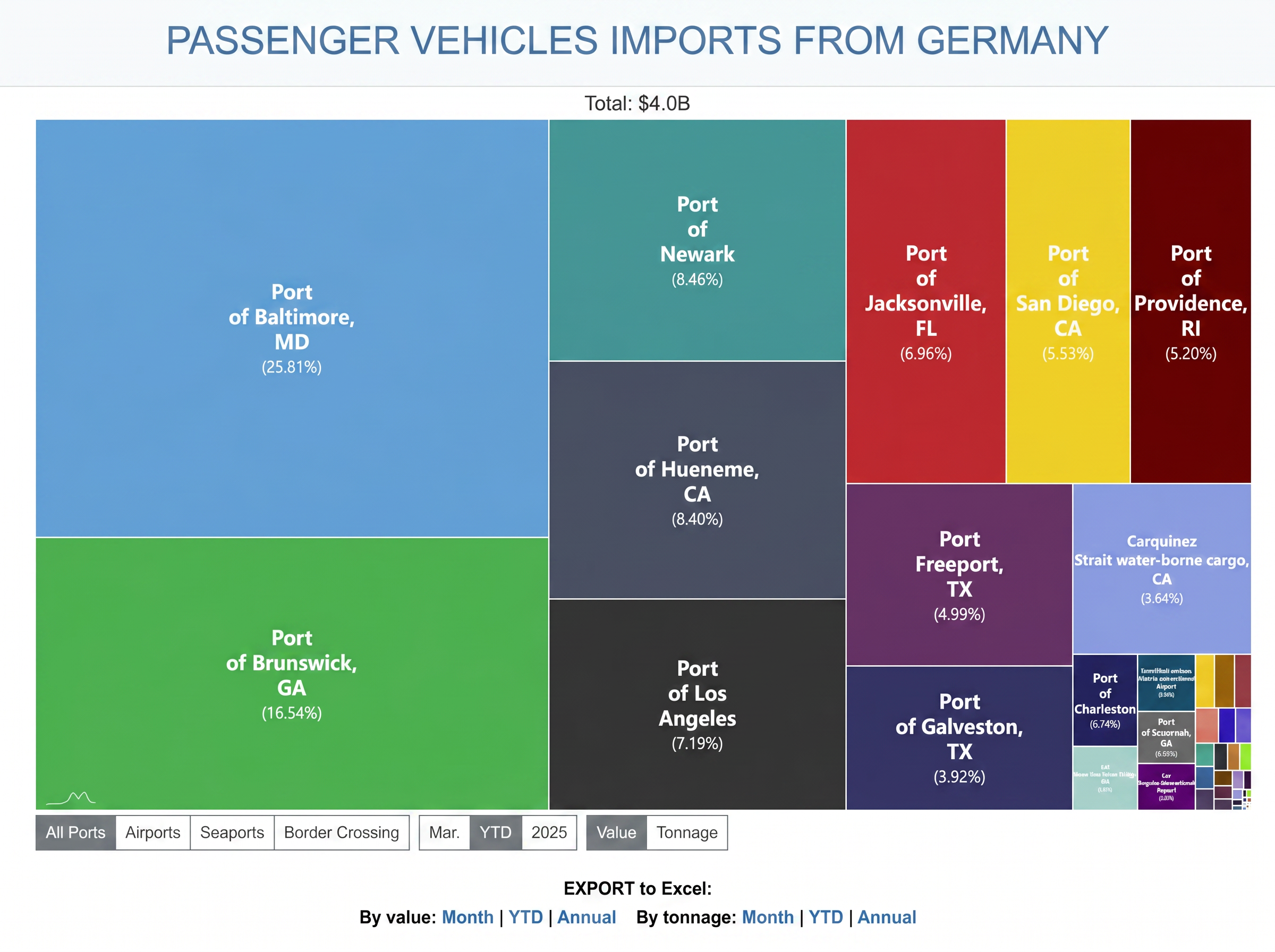
U.S. ports that heavily rely on vehicle imports are also left vulnerable by this back-and-forth. Key ports including Baltimore, Brunswick, and Hueneme could face operational disruptions. Together, they represent a significant portion of vehicle imports from the EU, increasing the stakes for national trade networks.
Current Trade Landscape
According to recent data, European vehicles accounted for 18.09% of all U.S. imports in early 2026, a slight decrease from 19.21% in 2025. Imports from Germany dominate this category, totaling 54.86% of EU vehicle imports.
Regional Port Dependency
The Port of Baltimore, which remains the top port for U.S. motor vehicle imports, derived about 31.66% of its total import value from motor vehicles, of which nearly 40% came from the EU. Other ports, such as Brunswick and Hueneme, exhibit similar dependencies:
- Port of Brunswick: 76.31% of its vehicle imports come from motor vehicles.
- Port of Hueneme: Slightly below 30% of vehicle imports are from the EU.
Future Considerations
The situation has created a complex landscape for U.S.-EU trade relations, with emphasis on tariffs and inflation. As tensions rise, the potential for renewed tariff discussions remains a looming threat, impacting consumers, manufacturers, and dependent ports alike.
Conclusion
While President Trump may have backed off from immediate tariff action, the risks to buyers and ports remain pronounced. As inflation continues to challenge the U.S. economy coupled with international trade complexities, stakeholders must remain vigilant in monitoring evolving policies and potential ramifications.
Popular news
A small plane crash while touring the Nazca Lines in Peru has resulted in 13 fatalities, including tourists and crew.





Subscribe to
our news
Get the most important updates and top stories in your inbox.