




 Business21 Jul 2026
Venezuela Surges as Fastest-Growing U.S. Trade Partner in 2025
Venezuela's trade with the U.S. surged 74.32% in 2025, fueled by rising oil imports amid global tensions and gas price spikes.
U.S.-Venezuela Trade Dynamics in 2025
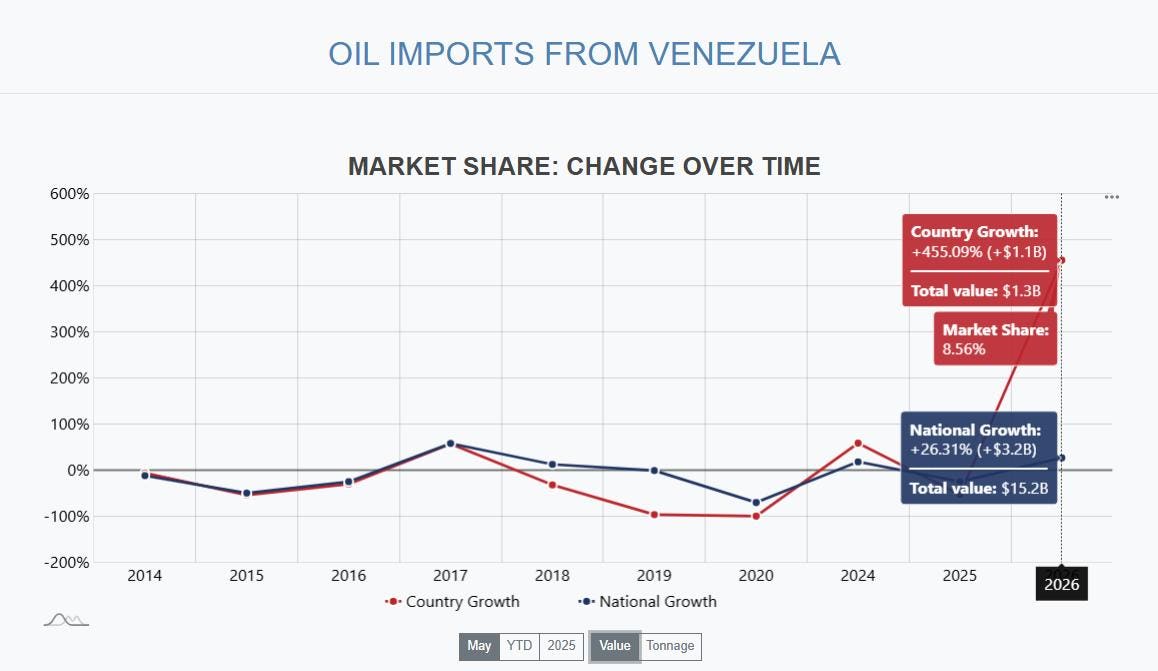
In a surprising turn of events, U.S. trade with Venezuela has skyrocketed by 74.32% in 2025, making it the fastest-growing trade partner for the United States. This dramatic increase in trade is primarily driven by a significant rise in oil imports, which have created a trade deficit of $2.35 billion with the South American nation, according to recent data from the U.S. Census Bureau.
Key Factors Behind the Surge
Oil Imports and Trade Deficit
Despite efforts to reduce dependence on foreign oil, the ongoing global tensions and rising gasoline prices have led to a reversal in trends with Venezuela. The trade dynamics starkly contrast the overall U.S. trade environment, which has seen a modest increase of only 2.63% across all partners this year.
U.S. oil imports from Venezuela rose to $3.97 billion, marking a notable increase from $1.95 billion the previous year. Notably, more than 86% of these imports consist of oil, contributing massively to the growing trade deficit. The value of imports in May alone was the highest since 2015, with a reported increase of $1.03 billion compared to the same month in the previous year.
Political Implications
The surge in trade with Venezuela comes amid complex political scenarios. The U.S. president's decision to effectively end an embargo on Venezuelan oil has opened the gates for increased imports, a strategy that appears to be at odds with U.S. efforts to reduce oil dependency. On January 3, Venezuelan President Nicolás Maduro was captured following a U.S. military operation, further complicating the geopolitical landscape as he awaits trial on charges related to narcotics.
Broader Implications on U.S. Trade Policy
A Contradiction in Priorities
While the U.S. administration highlights energy independence and a decreasing merchandise trade deficit, the burgeoning relationship with Venezuela presents a contradiction. Experts warn that as the U.S. administration talks about energy independence, its actions are pulling the trade policy in an opposing direction.
Overall, this complex interplay of geopolitics and trade illustrates how external factors, such as international disruptions from conflicts like the U.S. attack on Iran, directly influence domestic economic shifts and trade relationships.
As U.S. imports continue to accelerate, the trade deficit with Venezuela is likely to grow, placing the administration's narratives on energy and trade under scrutiny.
In 2025, the stark contrast between the rising imports from Venezuela and the overall narrowing U.S. trade deficit presents a unique case study of how global economics and political priorities interact, sometimes at odds with one another.
As this situation evolves, observers will closely monitor how the U.S. navigates its complex trade relations with Venezuela amidst fluctuating global oil prices and geopolitical challenges.
Popular news
New York has declared a disaster emergency over rising measles cases, especially among under-immunized populations, with 108 confirmed cases.




Subscribe to
our news
Get the most important updates and top stories in your inbox.