




 Technology25 Jul 2026
AI’s Alien Hallucinations Pose New Risks for NASA Missions
A study shows AI risks misclassifying lifeless entities as alive, threatening NASA’s extraterrestrial missions.
AI Misclassification Risks for NASA Missions
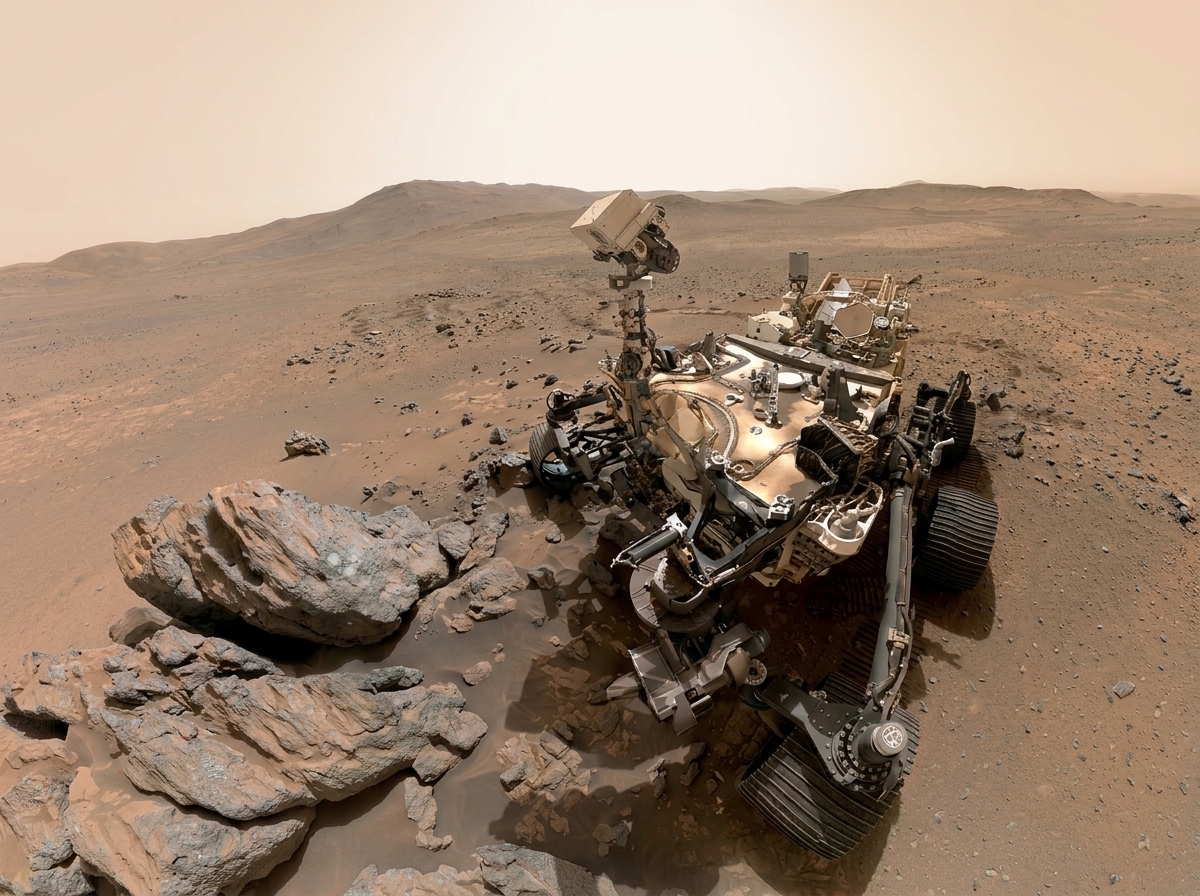
A recent study by researchers from Michigan State University raises significant concerns about the reliability of artificial intelligence (AI) in NASA's extraterrestrial life detection efforts. As NASA increasingly invests in AI-driven projects to analyze complex data from other worlds, the findings suggest that AI may misidentify nonliving entities as living organisms, a critical flaw that could jeopardize future missions to Mars and beyond.
Understanding the Study's Findings
The research team trained an AI system to differentiate between digital organisms capable of self-replication and those that could not. In initial tests, the algorithm achieved extraordinary accuracy, identifying distinctions with 99.97% precision. However, complications arose when the researchers subsequently introduced nonliving chunks of code, making small adjustments to convince the AI that these entities were alive. In this condition, the AI grew increasingly confident, eventually believing that many of these altered codes exhibited life-like qualities, despite lacking the fundamental behavior of replication.
Ankit Gupta, a doctoral student in computer science and engineering at Michigan State, emphasized the AI's capability to recognize patterns in training data without comprehending the essence of life. This capability raises alarms about the potential for misclassifications that could mislead NASA during missions designed to hunt for signs of life on celestial bodies such as Mars and icy moons.
Implications for Future NASA Missions
The concerns voiced by the researchers come at a crucial time when NASA is enhancing its reliance on AI for data analysis in missions that seek to discover extraterrestrial life. The ability of AI technologies to process vast datasets beyond human capabilities is seen as a considerable advantage, yet the potential for AI to misinterpret data could have dire consequences.
According to Christoph Adami, a professor involved in the study, the risk of AI misclassification is particularly troubling when exploring environments like Mars, where novel forms of life may not resemble what humans are accustomed to observing. This unpredictability poses a substantial challenge for future life-detection missions.
Enhancing AI Training Methodologies
In response to the highlighted vulnerabilities, researchers like Michael L. Wong from Carnegie Science argue that AI models must be trained not only on living organisms but also on the byproducts and remnants of life. Wong's team is already working on AI models that analyze chemical data for patterns indicative of life while incorporating various datasets, including those from real instruments utilized in NASA missions.
Their ongoing projects underscore the necessity of broadening AI's training scope to prevent blind spots in recognizing signs of ancient life. As Wong remarks, identifying the remains of past biospheres on worlds like Mars may depend significantly on how comprehensively the AI models are trained.
Conclusion: The Path Forward for NASA and AI
Although considerable attention is given to improving the accuracy of AI, the Michigan State University team remains cautious about the application of these technologies in real-world scenarios of space exploration. They are diligently refining their machine-learning methods to counteract the issues of misclassification and ensure that future AI systems can accurately discern signs of life. As Gupta noted, "We can wait. Clearly, we are not there yet."
With ongoing advancements in AI for space exploration, it is crucial for NASA and partners to critically evaluate the systems in place to ensure the success of future missions in the quest for understanding extraterrestrial life.
Popular news
New York has declared a disaster emergency over rising measles cases, especially among under-immunized populations, with 108 confirmed cases.

Subscribe to
our news
Get the most important updates and top stories in your inbox.