




 World16 Apr 2026
Fuel Price Protests Erupt Across Ireland Amid Rising Costs
Protests over soaring fuel prices are gripping Ireland as farmers and hauliers lead the charge against rising costs linked to geopolitical tensions.
Protests Erupt Over Soaring Fuel Prices
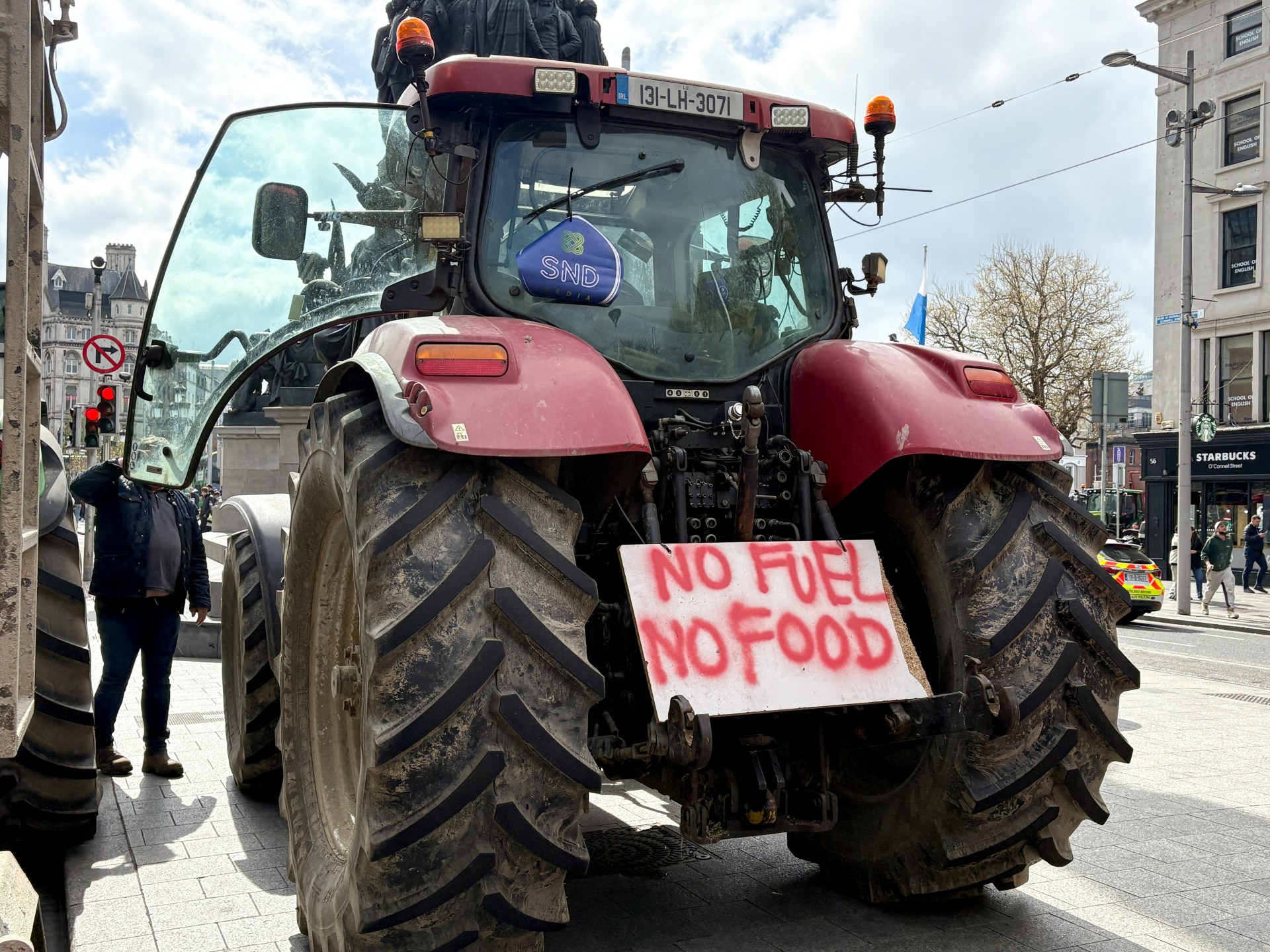
Fuel price protests have intensified across the Republic of Ireland, with farmers and hauliers blocking critical infrastructure in response to a staggering 28% increase in diesel prices. This protest movement, considered one of the most serious since the foundation of the Irish state in the 1920s, mirrors the Gilet Jaunes (Yellow Vests) protests in France to some extent, yet is primarily driven by exacerbating geopolitical tensions, notably linked to events in Iran.
Background of the Protests
The discontent among protesters is largely fueled by the significant rise in fuel costs following military actions in the Middle East, particularly the U.S. and Israeli strikes on Iran that began on February 28. The Strait of Hormuz, a key corridor for oil shipments, has been compromised, leading to a global shortage of oil. As a result, around 40% of petrol stations across Ireland were reportedly running dry last week, increasing frustrations among those reliant on fuel for their livelihoods.
Protest Actions and Government Response
Since the initial protests began, coordinated demonstrations have involved “go-slow” convoys that disrupted major roads, ports, and fuel depots, including protests in Dublin and County Limerick. The Irish government responded by deploying the army to assist police (An Garda Siochana) in removing blockades. The protests have led to numerous arrests as authorities attempt to restore normalcy amidst rising tensions.
In a bid to pacify growing unrest, the Irish government has introduced a $600 million relief package aimed at mitigating the impact of fuel price increases. This includes a 10% reduction in petrol and diesel prices and postponement of a planned carbon tax increase, but many demonstrators argue these measures fall short of addressing their grievances.
Root Causes of Discontent
The protests unveil deeper issues within Ireland's agricultural economy. Commentators like Patrick Bresnihan from Maynooth University emphasize that grievances stem from widespread exploitation of workers in the agricultural sector. Many farmers face precarious working conditions, reliant on seasonal and hourly contracts, raising concerns about economic inequalities that are driving the current unrest.
Public Response and Political Implications
While initial public sentiment was supportive of the protests, there are signs of waning enthusiasm as the disruptions have begun to affect essential services, including healthcare. The Irish health minister has already reported that planned surgeries might need to be canceled due to the chaos caused by the protests.
As the situation unfolds, the political landscape remains fraught. The Irish coalition government survived a confidence vote but faces pressure from various factions, particularly from Sinn Féin, Ireland's largest opposition party. This adds an additional layer of complexity to an already tense situation, as the coalition must navigate potential dissension within its ranks and a frustrated populace.
Potential for Spread to Northern Ireland
There have been preliminary discussions about the potential for protests to spread to Northern Ireland. However, recent planned demonstrations fell flat, failing to mobilize significant support among local communities. Observers note that the recent climate in Northern Ireland lacks the same level of motivation seen in the Republic, suggesting that protests may not gain traction unless circumstances change substantially.
Conclusion
As demonstrators continue to express their frustrations amid rising fuel costs, Ireland stands at a crossroads, confronting not only the immediate issues of fuel prices but also deeper systemic inequalities that have long persisted within its agricultural and economic structures. The government’s response and the evolving dynamics of public support will be crucial in shaping the future of these protests and their impact on Irish society.
Popular news
A small plane crash while touring the Nazca Lines in Peru has resulted in 13 fatalities, including tourists and crew.
Subscribe to
our news
Get the most important updates and top stories in your inbox.