 Technology04 Oct 2026
Geoneutrinos Offer Insights Into Earth’s Interior Through New Discoveries
New findings from Canada's SNO+ experiment reveal geoneutrinos hinting at uneven distribution of radioactive elements in Earth's mantle.
Unveiling Earth’s Secrets: The Role of Geoneutrinos
In a groundbreaking development, researchers at the SNO+ experiment in Sudbury, Canada, have successfully detected geoneutrinos—rare particles that could revolutionize our understanding of the Earth’s interior. This marks the first time geoneutrinos have been observed in the western hemisphere, providing significant insights into the distribution of radioactive elements within the mantle, a finding that challenges long-held geological assumptions.
The SNO+ Experiment
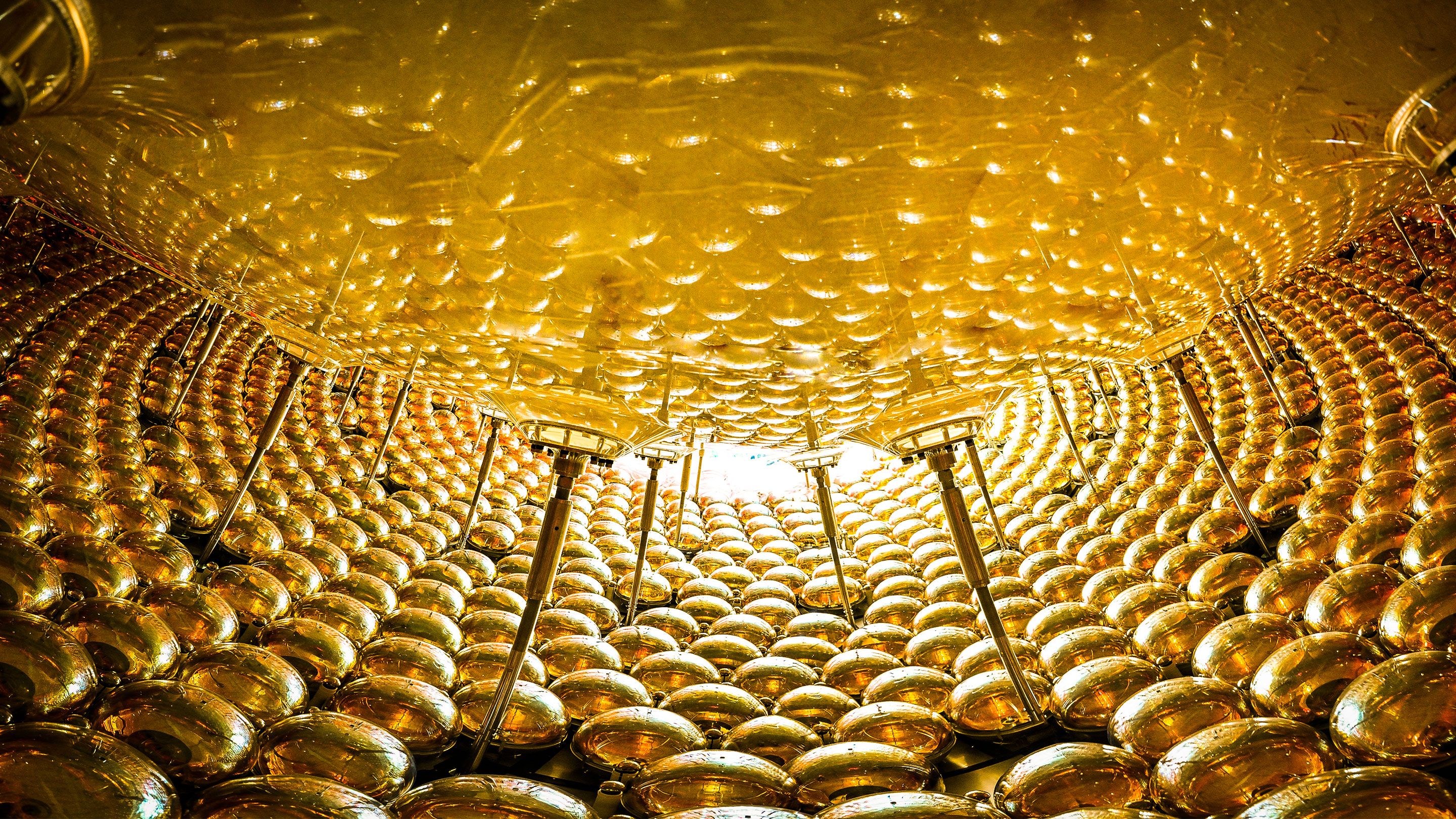
Buried deep within the Creighton mine, the SNO+ (Sudbury Neutrino Observatory) experiment consists of an intricate setup designed to record these elusive particles. The experiment houses a vast array of nearly 10,000 sensitive light detectors in a cavern filled with 7,000 tons of ultrapure water. These detectors are adept at capturing the rare flashes generated when energetic particles interact with the surrounding medium.
Matt Depatie, a detector technologist at SNO+, recently monitored the underwater conditions as the team conducted maintenance within this isolated setting. The challenge lies in maintaining absolute darkness to boost the chances of detecting neutrinos, particles that rarely interact with matter.
What Are Geoneutrinos?
Geoneutrinos are unique in that they are produced through the decay of radioactive elements such as uranium and thorium within the Earth’s crust and mantle. These particles play a crucial role in conveying information about Earth’s internal heat sources and processes. The heat generated by radioactive decay is vital in driving geological phenomena like plate tectonics and maintaining Earth’s magnetic field.
The first evidence of geoneutrinos was recorded in 2005 via Japan’s Kamland experiment, with subsequent detections from Italy’s Borexino furthering the knowledge base. Recently, SNO+ reported its own findings, adding substantially to the count of observed geoneutrinos globally.
Implications of the Findings
What makes the SNO+ findings particularly significant is the suggestion that radioactive elements might not be evenly distributed across the mantle, challenging the established view that geological processes mix materials uniformly. Mark Chen, a particle astrophysicist and director of the SNO+ collaboration, noted that different detection sites are revealing a variance in the flux of geoneutrinos, which may indicate differing concentrations of radioactive materials in the Earth’s mantle.
This pattern aligns with existing geological structures known as large low-shear-velocity provinces (LLSVPs), which are dense, hot regions situated beneath the Earth’s surface. The distribution of geoneutrinos could hint at the existence of previously unrecognized deep Earth structures that influence the chemical makeup of the mantle.
The Road Ahead: Future Research Directions
While the SNO+ experiment has laid critical groundwork, significant uncertainties remain. The ongoing JUNO project in China, another major neutrino experiment, is expected to enhance our understanding of geoneutrinos. With the capacity to detect a greater number of geoneutrinos due to its larger setup, JUNO may provide essential data that could either solidify or reshape current geophysical models.
Additionally, scientists like William McDonough advocate for the establishment of ocean-bottom neutrino detectors, which would offer a clearer view of the mantle's chemical properties without terrestrial interference. Despite the challenges in funding and geological modeling associated with such endeavors, advancements in geoneutrino research hold promise for uncovering the mysteries of Earth's interior.
In conclusion, the recent detection of geoneutrinos at the SNO+ experiment not only signifies a breakthrough in particle physics but also opens new avenues for understanding the intricate dynamics of Earth’s internal processes. As researchers continue to refine their techniques and explore new methodologies, our knowledge of the planet we inhabit could shift dramatically in the years to come.
Popular news
The US military's deployment in the Middle East intensifies risks of conflict with Iran amid stalled diplomatic efforts and significant sanctions.



Subscribe to
our news
Get the most important updates and top stories in your inbox.