





 Technology24 Sept 2026
Nexterity Aims to Revolutionize Pipefitting with Robotic Automation
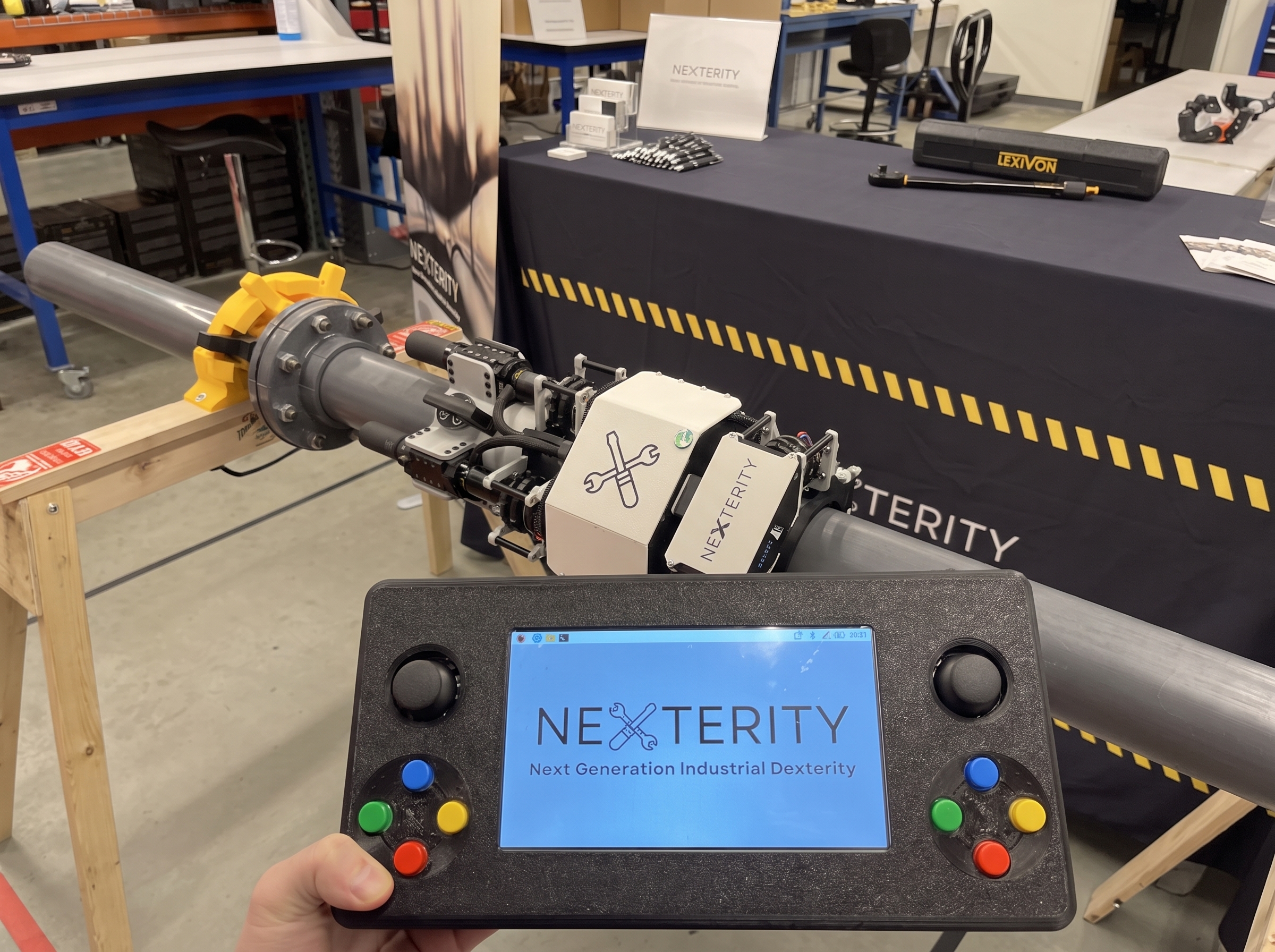
Nexterity launches a robotic solution to automate pipefitting tasks, tackling both safety issues and labor shortages in the industry.
Introduction to Nexterity's Innovation
Nexterity, a startup founded by Lindsey Elliott, is at the forefront of transforming the pipefitting industry by introducing an innovative remote-controlled robot. This crucial advancement aims to automate the oftentimes arduous and hazardous process of loosening and tightening bolts on pipe sections. By targeting these physically demanding tasks, Nexterity seeks to improve safety and productivity, particularly in sectors such as oil, gas, and water treatment.
The Problem with Traditional Pipefitting
Pipefitting, an essential component of various industries, often involves significant physical labor and poses numerous safety risks. Elliott, who previously served as an engineer and planner at ExxonMobil, highlighted the considerable hazards that workers face:
"Those people get really tired when they’re asked to work 12 hours a day for three months in a row," she remarked in an interview.
Moreover, the industry is grappling with a labor shortage, compounding the struggles for skilled pipefitters across North America. As a result, many in the field have noted that productivity levels are notoriously low, a challenge that Nexterity aims to address with its new technology.
The Robotic Solution
Design and Functionality
The heart of Nexterity's solution lies in its remote-controlled robot, which is designed to efficiently manage bolted flange joints—critical components connecting sections of pipe. The robot can handle multiple bolts simultaneously, increasing efficiency significantly. Elliott describes its design:
"The robot comes in two main pieces that fit around a pipe... it can slide across the pipe once it’s attached and quickly loosen and tighten four bolts at a time."
Compact and portable, the robot is small enough to be packed into a standard Pelican case, allowing a single worker to transport it easily to different job sites. This portability is vital for Nexterity's business model, which positions the robot as rental equipment for construction operations.
Market Potential
Elliott believes the automation potential in pipefitting is immense. Conversations with various professionals at industry events, including the Bolting Symposium, have revealed that a significant majority of pipes fall within specific diameter ranges, indicating high repeatability for automation. Elliott stated:
"When you have that much repeatability, you have a fantastic candidate for automation."
She stresses that many sectors, often overlooked in discussions about piping infrastructure, rely heavily on these systems for their daily operations. Areas like wastewater management, food and beverage production, mining, and even green manufacturing facilities all utilize similar piping setups.
Looking Ahead
Through its innovative approach, Nexterity hopes to make a significant impact not only on the safety of pipefitting but also on the overall productivity of the industry. By addressing both labor shortages and the physically demanding nature of the work, Nexterity's robotic solutions could fundamentally shift how pipefitting tasks are approached in the future, making workplaces safer and more efficient for all.
In a world where automation is fast becoming a norm across industries, Nexterity's vision represents a pivotal step towards modernizing a historically manual trade, making it a more viable option in today's workforce landscape.
Popular news
Netanyahu dismisses West Bank violence as actions of 'juvenile delinquents' during a UN speech, focusing on Israel's military success against Hezbollah.





Subscribe to
our news
Get the most important updates and top stories in your inbox.
