




 Technology20 May 2026
OpenAI Claims to Have Solved a Historic Mathematical Conjecture
OpenAI reveals it has disproved an 80-year-old math conjecture, highlighting AI's growing capability in complex reasoning.
OpenAI Makes Bold Claim in Mathematics
OpenAI announced that its latest reasoning model has made significant strides in the field of mathematics by successfully disproving a famous conjecture posed by mathematician Paul Erdős in 1946. This claim follows a controversial statement made last year by former OpenAI VP Kevin Weil, who suggested that a previous model, GPT-5, had solved multiple Erdős problems, a claim that was later revoked for inaccuracies.
As part of its announcement, OpenAI published testimonies from reputable mathematicians which affirmed the validity of its latest finding, distinguishing it from its prior missteps and emphasizing the advances AI technology has made in complex reasoning.
Context of the Conjecture
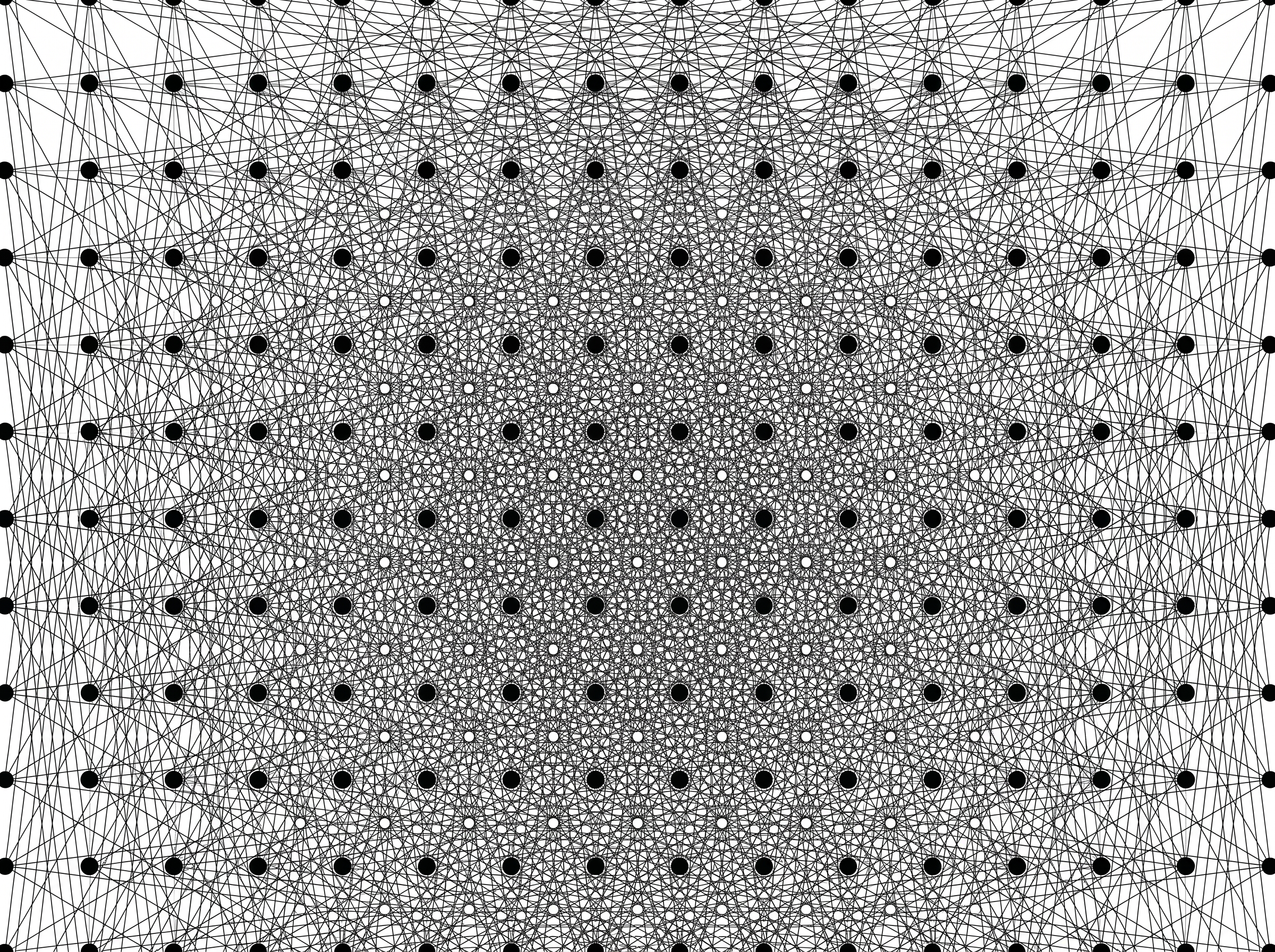
The conjecture in question pertains to the arrangements of geometric shapes, where for nearly 80 years, many believed that optimal solutions were constrained to configurations that resembled square grids. OpenAI's proof suggests otherwise, unveiling an innovative family of structures that outperform these traditional assumptions.
In a statement on X, OpenAI highlighted, "An OpenAI model has now disproved that belief, discovering an entirely new family of constructions that performs better." This marks a pivotal moment in AI's journey within the realm of mathematics, showcasing its ability to autonomously tackle open problems that have stumped researchers for decades.
Support from Mathematicians
Mathematicians such as Noga Alon, Melanie Wood, and Thomas Bloom have lent their support to OpenAI's claims, with Bloom noting, "AI is helping us to more fully explore the cathedral of mathematics we have built over the centuries. What other unseen wonders are waiting in the wings?" This underscores a growing recognition in the academic community of AI's potential to uncover new methodologies and paths in mathematical research and beyond.
Implications for Science and Technology
OpenAI's announcement has broader implications for various scientific disciplines including biology, physics, engineering, and medicine, suggesting that AI could help bridge connections between disparate fields in unique ways that researchers might not have considered.
In conclusion, if OpenAI's claims are validated, it could represent a transformative leap not only for mathematical proof but also for the role of artificial intelligence within various scientific arenas. As AI continues to evolve its reasoning capabilities, the promise of new discoveries looms on the horizon, raising questions about what other rich insights await exploration.
Popular news
Nuveen acquires Schroders, creating a $2.6 trillion asset management powerhouse.




Subscribe to
our news
Get the most important updates and top stories in your inbox.