




 Technology16 May 2026
Perseverance Rover Shares Stunning Selfie; Concerns Rise Over Satellite Launch Pollution
NASA's Perseverance rover snaps a selfie on Mars, while a new study reveals potential pollution from satellite launches.
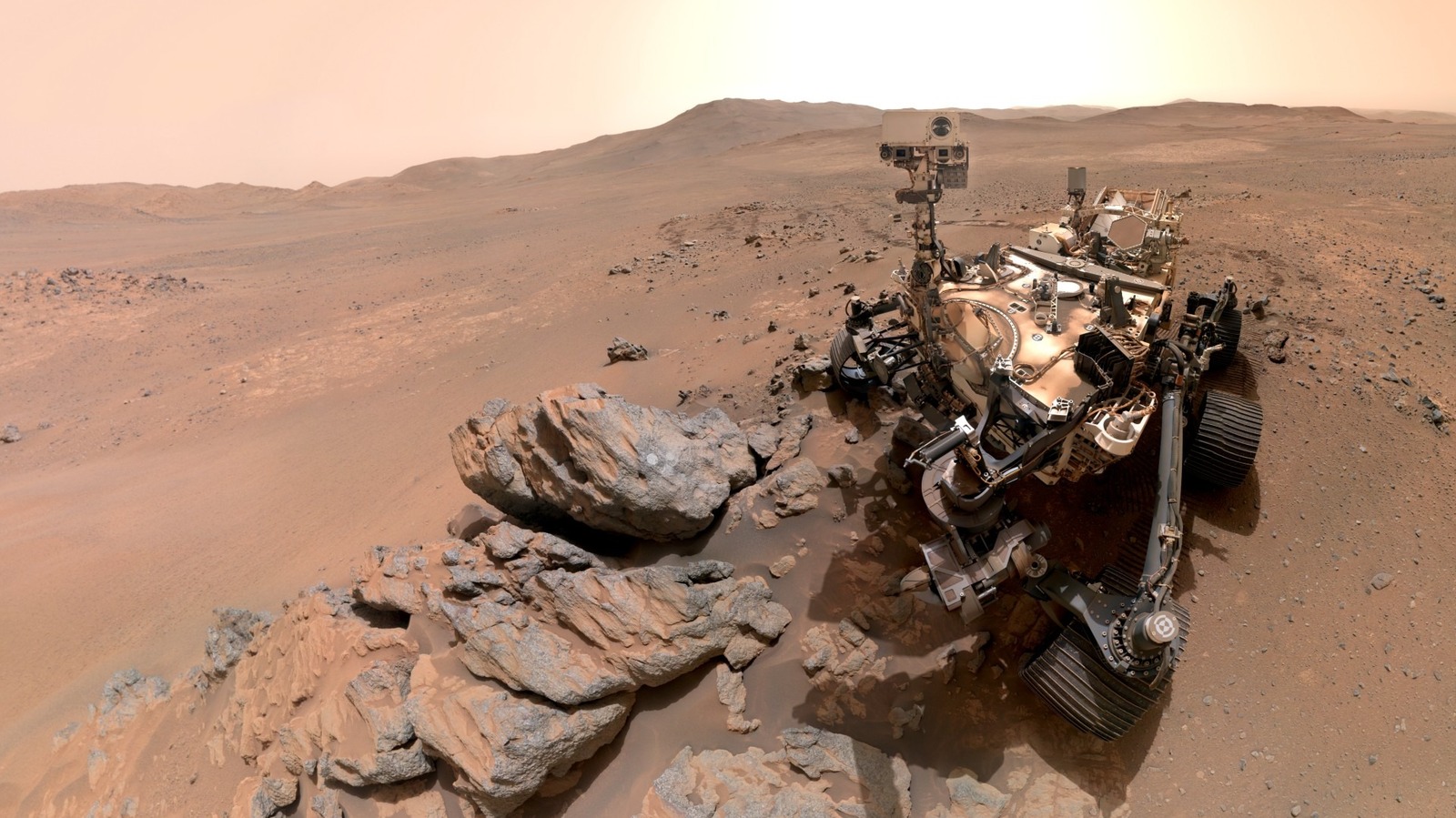
Perseverance Rover Captures New Selfie on Mars
NASA's Perseverance rover has recently shared its sixth selfie taken on Mars, showcasing the rover's continued exploration of the storied Jezero Crater. This latest image, which is part of a sequence taken during its journey westward, emphasizes Perseverance’s commitment to studying ancient signs of microbial life. The terrain around the rover presents some of the most scientifically intriguing landscapes observed thus far in its mission.
A Glimpse at Ancient Terrains
The selfie reveals Perseverance posed against a rocky outcrop named "Arathusa," located within the region known as "Lac de Charmes." According to NASA, this area could hold vital clues to the planet's climatic history. Notably, the rover has ventured beyond the crater's rim in search of geological formations that could be as old as 3.9 billion years. A recently released animated version of the selfie shows the rover in action, pivoting its camera head, which captures a broad vista of the Martian landscape.
In addition to taking selfies, Perseverance is actively collecting rock samples and analyzing the surface composition of the terrain. As it continues its journey, the rover is preparing to explore a site designated "Gardevarri," located south of its current position, after examining striking volcanic features in the "Arbot" area.
Satellite Launch Pollution Concern
While NASA’s rover makes strides on Mars, a new study has raised alarms about the environmental impact of increasing satellite launches back on Earth. The number of annual satellite launches has skyrocketed in recent years, significantly driven by commercial initiatives, particularly by companies like SpaceX. Since 2019, SpaceX has deployed nearly 12,000 satellites as part of its Starlink megaconstellation program, with more than 10,300 currently operational in orbit.
Research published in the journal Earth's Future indicates that these extensive satellite operations could generate approximately 870 metric tons of soot annually by 2029. This alarming increase poses a potential threat to climate stability, as pollution at higher atmospheric levels can have disproportionate impacts compared to emissions closer to the Earth's surface.
The Environmental Implications
Project lead Eloise Marais from University College London warns that while the cooling effects of reduced sunlight due to this soot might sound beneficial amid rising global temperatures, caution is necessary. The long-term implications of such pollution could introduce complex environmental challenges. Researchers note that the space industry's contribution to climate impact was around 35% in 2020, a figure predicted to rise to 42% by 2029.
In light of these findings, it becomes imperative for the space industry to address and mitigate the environmental effects of satellite launches before they lead to irreversible consequences. As NASA continues its exploration of Mars, the implications of human activity on Earth require immediate attention.
Photo Attribution
null
Popular news
Netanyahu dismisses West Bank violence as actions of 'juvenile delinquents' during a UN speech, focusing on Israel's military success against Hezbollah.





Subscribe to
our news
Get the most important updates and top stories in your inbox.