




 Technology22 Apr 2026
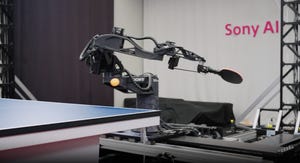
Sony Unveils 'Project Ace': The Table Tennis Playing AI Robot
Sony's 'Project Ace' robot showcases AI's potential by beating human players in table tennis, hinting at future sports applications.
Introduction
Sony has made headlines with the unveiling of its groundbreaking project, dubbed 'Project Ace.' This autonomous robot is equipped to compete against professional table tennis players, demonstrating remarkable dexterity and intelligence through advanced artificial intelligence (AI) systems.
What is Project Ace?
According to Sony, Project Ace signifies a leap towards achieving human-like expert performance in physical sports. Unlike the typical focus on agentic AI that performs tasks on behalf of users, Project Ace brings the physical capabilities of AI to the forefront—showcasing its competitive prowess in a sport renowned for its speed and agility.
The Technology Behind Ace
Project Ace harnesses an array of cutting-edge technologies that allow it to excel in the complex dynamics of table tennis:
- Advanced Sensory Technology: The robot features nine active pixel-sensor cameras that provide a 3D understanding of the ball's position, crucial for precision in such a fast-paced environment.
- Model-Free Reinforcement Learning: Ace employs a control system enabling it to adapt in real-time without relying on preprogrammed movements.
- High-Speed Robotics: When combined with its AI capabilities, the robot's hardware can respond and react with human-like speed, a necessity for competitive play.
Testing and Performance
In a series of tests against elite players, Project Ace showcased its capabilities, winning three out of five matches against professional opponents. Notably, while serving, the robot logged 16 points against the players’ total of eight. This performance underlines the significant advancements in AI that enable machines to not only compete but excel in sports traditionally dominated by humans.
Implications for the Future
Peter Dürr, director of Sony AI and the project lead for Ace, articulated the potential implications of such technological innovations. He stated, "Table tennis is a game of enormous complexity that requires split-second decisions as well as speed and power." The success of Project Ace opens the door to a new class of real-world applications for AI in physical environments, hinting at a transformative future in sports and beyond.
Peter Stone, chief scientist at Sony AI, echoed this sentiment, emphasizing that once AI systems reach expert human performance, they could unlock unprecedented opportunities across various fields of endeavor.
Conclusion
Project Ace is more than just an exhibit of what AI can achieve in sports; it is a clear indicator of how technology is evolving to meet human standards of performance. Sony’s innovation not only challenges the boundaries of robotics but also enhances our understanding of AI's potential in complex, physical tasks.
Popular news
A small plane crash while touring the Nazca Lines in Peru has resulted in 13 fatalities, including tourists and crew.





Subscribe to
our news
Get the most important updates and top stories in your inbox.