 World26 Jul 2026
Tunisia Faces Prolonged Turmoil After Saied's Power Consolidation
Five years post Saied's power grab, Tunisia confronts economic woes and protests calling for democracy and the release of political prisoners.
Tunisia at a Crossroads
Five years have passed since Tunisian President Kais Saied suspended parliament and amassed sweeping powers in July 2021, an event that reshaped the country's political landscape. As Tunisia grapples with rising discontent, the nation is experiencing severe economic challenges and political divisions that have ignited protests and calls for action against Saied's regime.
Economic Decline Under Saied's Rule
Since assuming near-total control, Tunisia's economic indicators have sharply declined. The investment rate plummeted from an average of 20% of the gross domestic product (GDP) recorded between 2015 and 2019 to a mere 8% in 2023, according to Ridha Chkoundali, an economics professor at the University of Tunisia. This downturn is attributed to an environment increasingly hostile to investment, punctuated by rising taxation.
“Taxation, once a tool to stimulate economic growth, is now utilized solely for revenue collection,” Chkoundali stated, highlighting the pressing need for strategic economic reform.
Ordinary Tunisians are bearing the brunt of this crisis. Rising food inflation—reportedly nearly three times the general average—has severely impacted their purchasing power. The unemployment rate, particularly among university graduates, continues to rise, prompting many young Tunisians to seek opportunities abroad.
Political Crackdown and Protests
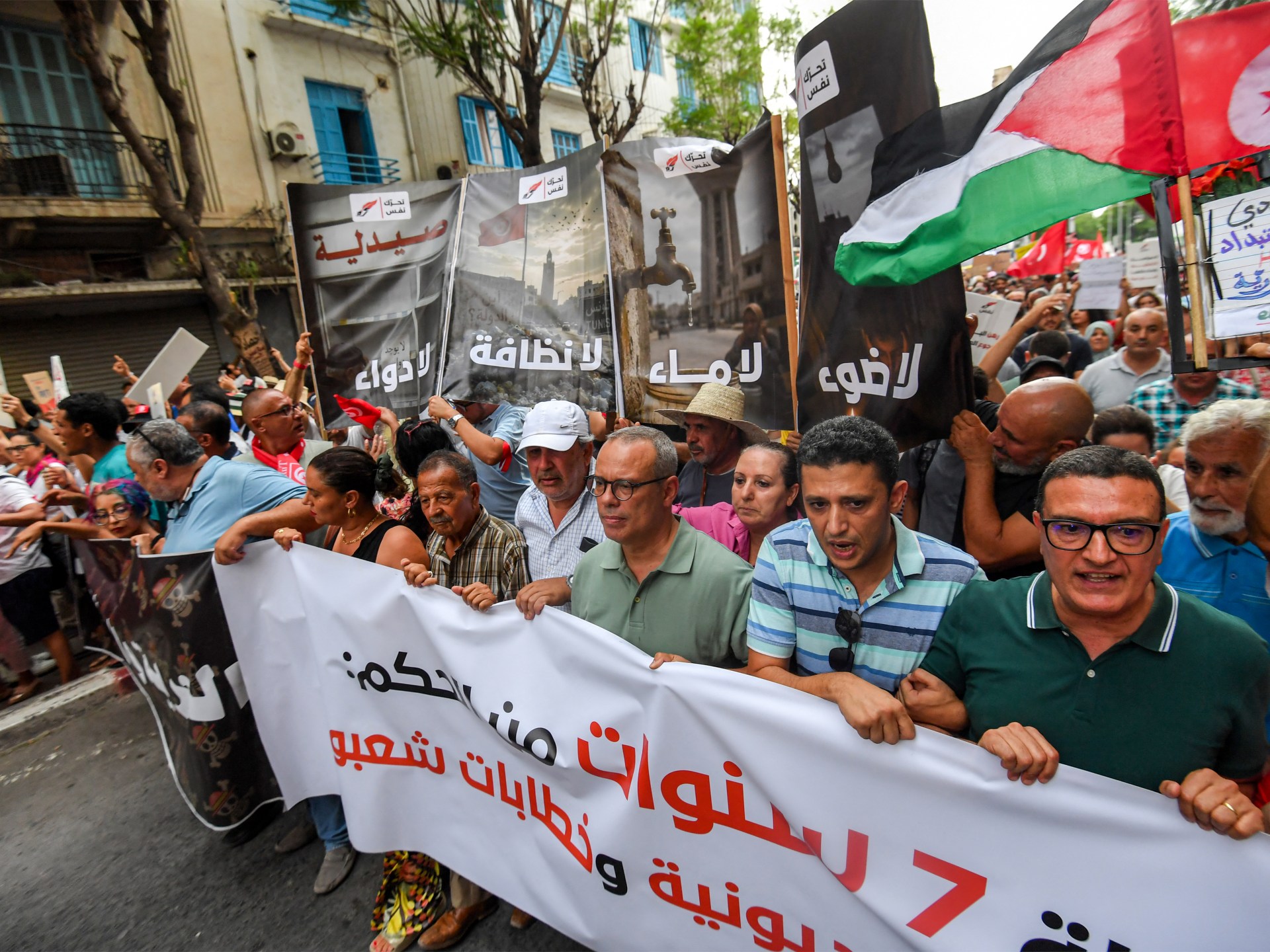
As living conditions worsen, public outrage has grown, manifesting in protests across the nation. On the fifth anniversary of Saied's consolidation of power, thousands gathered in the capital, Tunis, demanding improved conditions and shouting calls for Saied's resignation.
The protests were organized by various opposition groups under a coalition known as the “Nafas” civil initiative, igniting echoes of the democratic aspirations that fueled the 2011 revolution. Protestors also demanded the release of political prisoners, many of whom have been imprisoned since Saied's rise to power, including notable figures like Rached Ghannouchi, the former parliament speaker, whose health has deteriorated during his imprisonment.
Mohamed Abbou, formerly a minister and an opposition figure, criticized Saied's governance style, emphasizing the erosion of the rule of law and the intimidation tactics directed at dissenters.
International Response and Calls for Sanctions
International condemnation of Saied's regime has surged alongside domestic discontent. On the anniversary of his power grab, U.S. Representative Joe Wilson highlighted Saied’s actions, labeling them as a shift from democracy to dictatorship, with accusations of rampant corruption and distorted alliances with undesirable international figures.
Wilson urged the U.S. State Department to issue travel advisories against Tunisia and has positioned himself to advocate for sanctions under the Tunisia Democracy Restoration Act against Saied and his associates.
Conclusion
As Tunisia marks five years under Kais Saied’s rule, the nation stands at a perilous juncture. With economic instability and political unrest escalating, the vision for Tunisia’s democratic future remains clouded with uncertainty. Citizens await a resolution to their plight amid growing calls for accountability from both local and international leaders.
Popular news
New York has declared a disaster emergency over rising measles cases, especially among under-immunized populations, with 108 confirmed cases.


Subscribe to
our news
Get the most important updates and top stories in your inbox.