





 Business21 May 2026
US Marines Innovate with H-1 Helicopters as Drone Command Centers
US Marines are testing helicopters as airborne motherships for FPV drones, enhancing combat strategies and reducing risks.
US Marines Explore New Drone Tactics with Helicopters
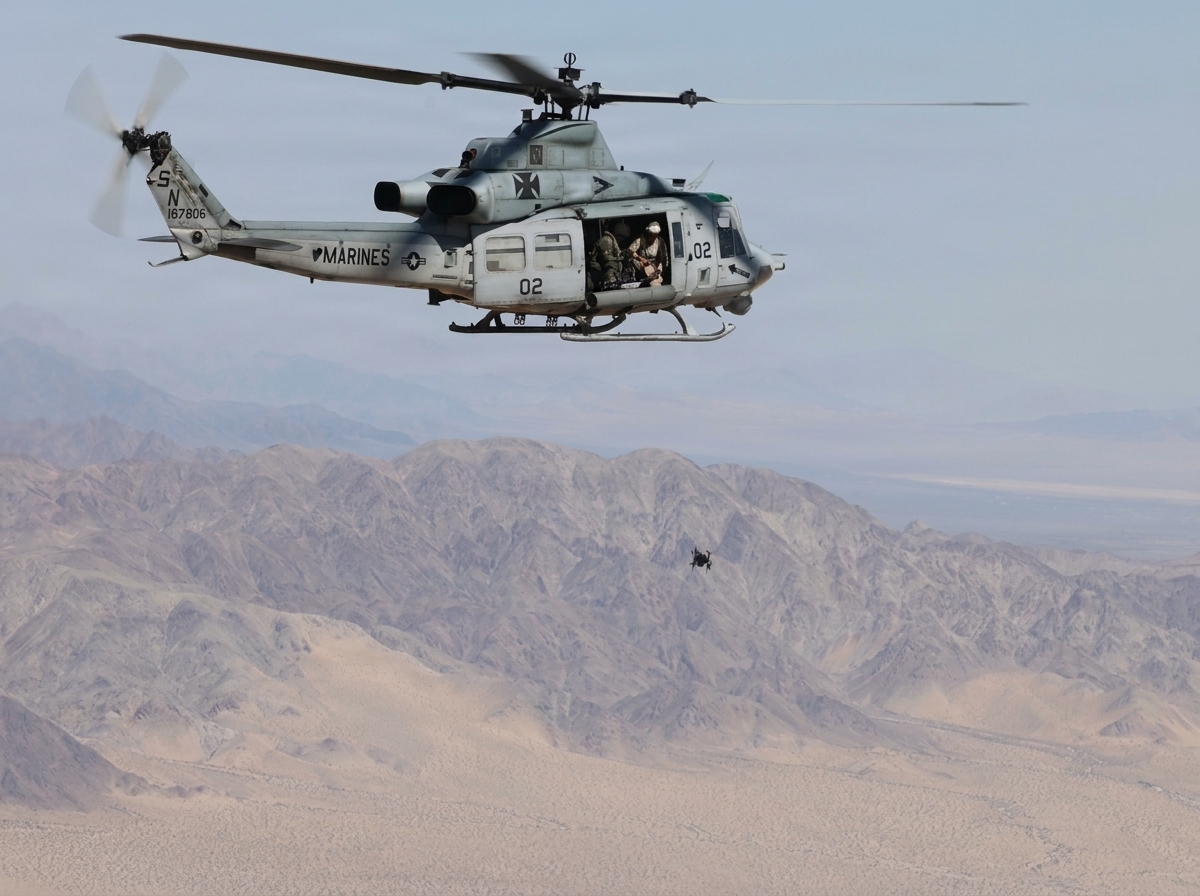
In a significant leap forward in drone warfare, the US Marines are experimenting with utilizing H-1 helicopters as airborne motherships to launch and control first-person view (FPV) drones during combat operations. Recent exercises have demonstrated the viability of this innovative approach, which allows for enhanced battlefield coordination while minimizing the risks to personnel.
Testing New Frameworks in Combat Operations
During a recent training exercise in California, Marines successfully deployed an FPV drone from a moving helicopter and subsequently transferred control to another helicopter stationed several miles away. This strategy enables a safer means of engagement without directly exposing the helicopters to potentially hostile airspace.
The test was conducted by Marine Light Attack Helicopter Squadron 169 and the 3rd Light Armored Reconnaissance Battalion. They utilized two modern H-1 helicopters: the UH-1Y Venom utility helicopter and the AH-1Z Viper attack helicopter, both of which are key assets in the Marines' aviation arsenal.
Airborne Motherships in Action
In their exercises, Marines demonstrated that helicopters can function as aerial command posts, maintaining control over drones several miles away. During the drill, after launching a Neros Archer FPV drone from the ground, the control was handed off to a team aboard a UH-1Y Venom helicopter. This crew managed the drone’s flight path, effectively acting as a ‘flying command post’ that orchestrated its movements toward a designated target.
The 3rd Marine Aircraft Wing noted that this capability presents commanders with "a scalable, cost-effective option" to engage various threats while preserving aircraft safety and avoiding unnecessary munitions expenditure.
Advantages of Dual-Use Platforms
The use of drones like the Neros Archer—widely integrated into Marine operations—provides distinct advantages. With its ability to carry different payloads, the Archer can adapt to mission needs, enhancing tactical flexibility for ground forces.
In addition, this method significantly lowers the risk to aircrews. According to Sergeant Matthew Pocklington, a crew chief from the UH-1Y, the strategy allows Marines to conduct ground and close air support in a manner that keeps them out of harm’s way, as they deploy drones to engage the enemy.
Future Directions in Unmanned Aviation
Looking beyond these tests, the US military is increasingly focused on the integration of manned and unmanned systems. With ongoing projects in both the US Air Force and Navy, military leaders are exploring enhanced interactions between crewed aircraft and drones, paving the way for advanced operational capabilities in future conflicts.
Through these innovative tactics and technologies, the US Marines are positioning themselves at the forefront of modern warfare, fundamentally transforming how combat operations will be conducted.
Popular news
Nuveen acquires Schroders, creating a $2.6 trillion asset management powerhouse.



Subscribe to
our news
Get the most important updates and top stories in your inbox.
