




 Technology12 May 2026
New Hubble Observations Challenge Age of Milky Way's Core
Hubble's latest findings suggest the Milky Way's core might be younger than 10 billion years, raising questions about galaxy formation.
Hubble Uncovers Surprising Insights About Milky Way's Core
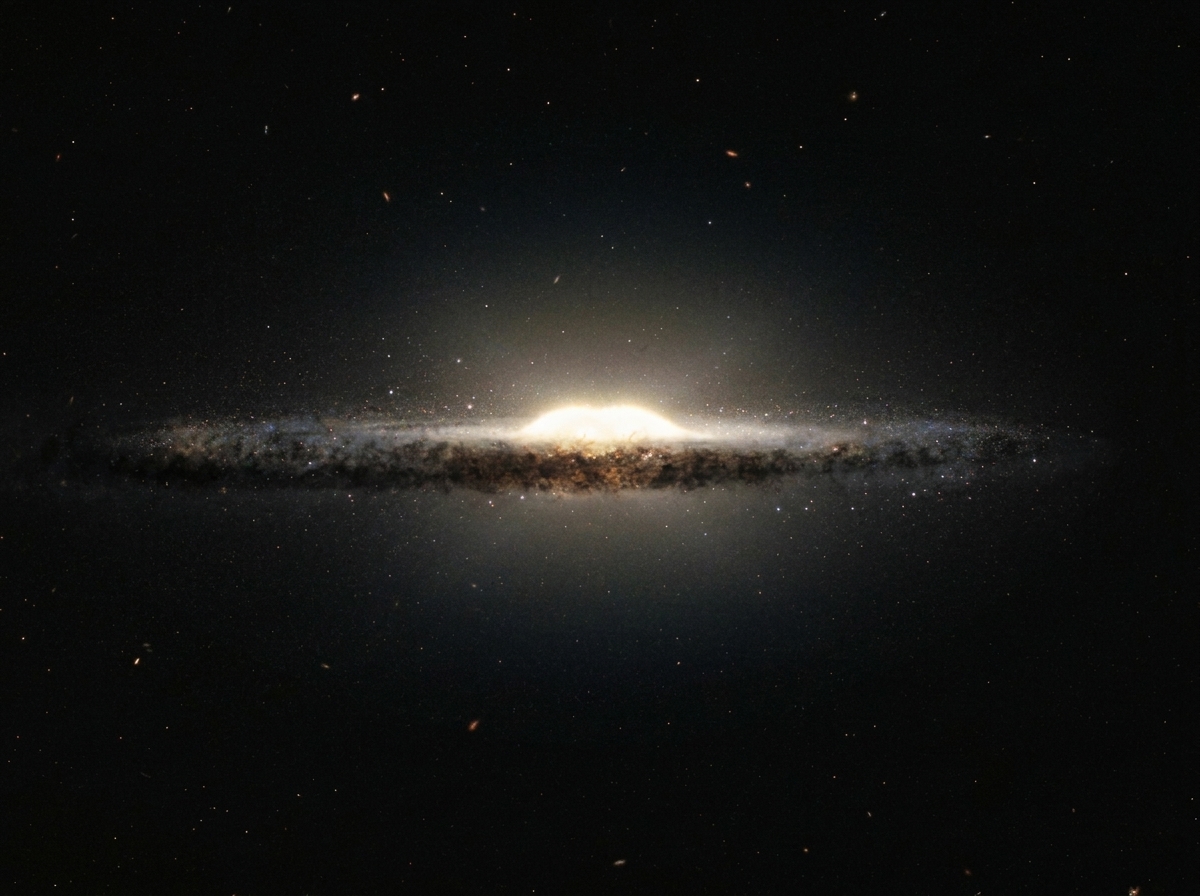
Astronomers utilizing NASA's Hubble Space Telescope have made groundbreaking discoveries about the age and formation of the Milky Way's core, indicating that it may not be as ancient as previously assumed. Long thought to have formed around 10 billion years ago, new data suggests that many stars located in this densely packed central bulge could actually be as young as 5 to 8 billion years old.
Challenging Long-held Beliefs
For decades, the central bulge of the Milky Way was viewed as a remnant from the galaxy's earliest epochs. Previous studies, based on star brightness and color, suggested that the primary formation of this area occurred roughly 10 billion years ago, a timeline that starkly contrasts with the formation of our solar system, which took place about 4.6 billion years ago.
However, recent findings have complicated the narrative surrounding the bulge's age. Some investigations imply that a significant number of stars in this central region could be notably younger than once thought. If these conclusions are validated, it would imply that the Milky Way continued to develop its core far later than previously estimated, offering a more nuanced understanding of how the galaxy evolved over time.
The Expansive Hubble Survey
The ongoing Hubble survey seeks to catalog between 20 to 30 million objects within this crowded area, providing essential data for astronomers. Sean Terry, an assistant research scientist at the University of Maryland and NASA's Goddard Space Flight Center, asserts that the survey aims to enhance understanding of galactic formation and evolution. The researchers have published their findings in the
Astrophysical Journal Letters.
Researchers are also actively preparing for the upcoming Nancy Grace Roman Space Telescope mission. This new telescope will explore the same region for planets through a technique called gravitational microlensing, which measures how gravity bends and brightens starlight from distant objects. Scheduled to launch within this year, the Roman telescope is set to revolutionize certain aspects of astronomical observation.
Hubble's Role in Future Discoveries
Jay Anderson, a co-author from the Space Telescope Science Institute in Maryland, explained that the primary aim of the Hubble observations is to identify objects that will be involved in future lensing events during the Roman survey. "When, in a couple of years, an event happens during Roman's long stare at the field, we can go back and identify the stars involved in the lensing event," said Anderson.
Although designed to complement the Roman mission, the Hubble survey holds its own significance by providing one of the clearest wide-area views captured of the Milky Way's dense core. By distinguishing overlapping stars more clearly, astronomers can develop a consistent catalog during their investigations across 354 fields near the galactic center.
Mapping the Galactic Landscape
The variations in conditions experienced by researchers across different fields will help illuminate the characteristics of the interstellar dust present in the galactic center. This will allow astronomers to track where starlight is obscured and where it shines unabated.
While Hubble enhances the view of these packed stars, it cannot eliminate the impacts of dust, leaving several areas of the Milky Way's interior clouded. Future works from the survey are expected to yield detailed maps of this interstellar dust, revealing the distribution of stars and how they interact with their cosmic surroundings.
Research teams anticipate that continuous monitoring by the Roman telescope will clarify the dynamic nature of these stars as they change positions over time. Collectively, the Hubble results and upcoming Roman observations will provide a wealth of information, potentially unlocking deeper insights into the Milky Way's fascinating history.
Popular news
A small plane crash while touring the Nazca Lines in Peru has resulted in 13 fatalities, including tourists and crew.





Subscribe to
our news
Get the most important updates and top stories in your inbox.